

Program for New Dealership Hires
Investing in a structured sales training program is one of the most impactful decisions a dealership can make for its long-term success. Simply handing a new hire a desk and a phone is a recipe for high turnover and inconsistent customer experiences. A well-designed program transforms eager but inexperienced individuals into confident, compliant, and high-performing automotive sales professionals. By establishing a clear framework for product knowledge, sales processes, and compliance from day one, you build a foundation for a stronger team. This proactive approach not only accelerates a new employee's path to profitability but also cultivates a professional culture that improves customer satisfaction and retention. Building a great sales team starts with building a great training plan, ensuring every new member understands your dealership's values and is equipped with the tools to succeed and represent your brand effectively on the sales floor.
A successful training program is not a one-time event but an ongoing process of development and reinforcement. It should blend classroom-style learning with practical, hands-on experience, including role-playing and shadowing veteran team members. This methodology ensures new hires can confidently apply what they have learned in real-world customer interactions. Ultimately, a dealership that prioritizes comprehensive training is investing in its most valuable asset: its people. This commitment leads to lower staff turnover, higher morale, and a more profitable and sustainable business model for the future.
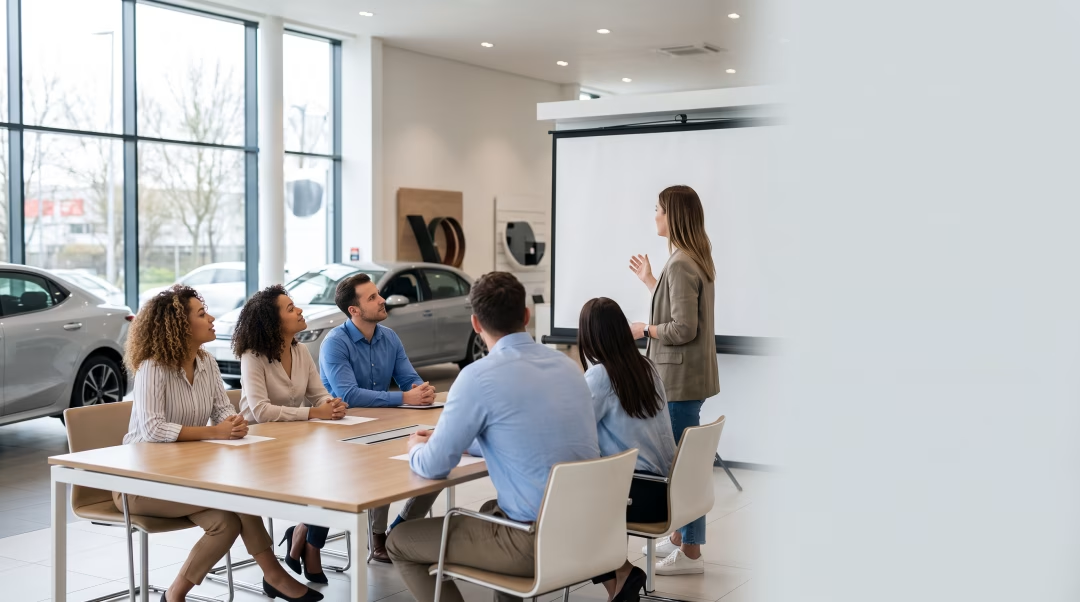
Crafting an Elite Automotive Sales Training Curriculum
The difference between a thriving dealership and one that constantly struggles often comes down to the quality and consistency of its sales team. The key to building that high-performing team is not just hiring the right people but empowering them with a world-class training program from their very first day. An effective onboarding and training process does more than teach the basics; it immerses new hires in your dealership's culture, process, and commitment to customer service. It is the framework that ensures every person on your sales floor can guide customers through the buying journey with confidence, knowledge, and integrity. This investment pays dividends in reduced employee turnover, improved closing rates, higher customer satisfaction scores, and a stronger bottom line.
Phase 1: The Foundational First Week
The first week is critical for setting expectations and making a new employee feel like part of the team. This period should be less about high-pressure sales goals and more about building a solid base of knowledge and cultural understanding. A great start ensures your new team member feels supported and prepared for the challenges ahead.
- Culture and Philosophy: Start by introducing the dealership's mission, vision, and values. Go beyond the posters on the wall and explain your unique approach to customer service. Share stories that illustrate your brand promise in action. This is a great time to introduce them to key personnel and share details you would find on an about us page, helping them understand the people who make the business successful.
- Systems and Tools Introduction: Provide a thorough walkthrough of the essential software they will use daily. This includes the Dealer Management System (DMS) and Customer Relationship Management (CRM) software. Focus on the fundamentals: how to log a customer, update a profile, and track communication. Understanding what is a dealer management system and why it matters is a core competency.
- Initial Product Knowledge: New hires do not need to memorize the specs of every vehicle in your used inventory immediately. Instead, teach them how to find information. Show them how to read vehicle history reports, locate key features, and understand the general value propositions of your most common vehicle types (e.g., fuel-efficient sedans, family-friendly SUVs, work trucks).
- Compliance 101: Introduce the absolute non-negotiables of automotive sales compliance from the very beginning. Cover basic but critical topics like privacy (Safeguards Rule), truthful advertising, and the importance of accurate disclosures. Reinforce that ethical conduct is paramount. For a deeper dive, consider resources like our guide on training your team on compliance basics.
Phase 2: Mastering the Sales Process
Once the foundation is set, the training should transition to the dealership's specific, step-by-step sales process. This phase is about moving from theory to practice, equipping the new salesperson with the skills needed to interact with customers effectively. This is where repetition and hands-on learning are vital.
Begin by mapping out every stage of your "road to the sale." This is your dealership's unique playbook for success. It should cover everything from the initial meet-and-greet to the final delivery. Break it down into manageable segments:
- Discovery and Needs Analysis: Train them to ask open-ended questions that uncover a customer's true needs, wants, and budget. This is about listening more than talking.
- Vehicle Presentation and Walkaround: Teach a feature-advantage-benefit approach. It is not just about pointing out a feature (e.g., "This has all-wheel drive"), but explaining its advantage ("Which gives you better traction") and the benefit to the customer ("So you will feel safer driving in rain or snow").
- The Demonstration Drive: The demo drive should be a planned route that showcases the vehicle's strengths. Train the salesperson to use this time to build rapport and reinforce the vehicle's benefits.
- Handling Objections and Negotiation: Role-playing is essential here. Create a safe environment where new hires can practice responding to common objections about price, trade-in value, and payments without the pressure of a live deal.
- F&I Handoff: Ensure a smooth and professional transition to the finance office. The salesperson should be trained on how to set the stage for the F&I manager, making the customer feel comfortable and prepared.
Phase 3: Ongoing Development and Advanced Skills
Effective sales training never truly ends. The industry evolves, customer expectations change, and even seasoned professionals can benefit from sharpening their skills. An ongoing development plan keeps your team at the top of their game and shows them that you are invested in their long-term careers. The goal is not just to create good salespeople, but to hire and retain great sales staff who see a future with your dealership.
Incorporate continuous learning into your dealership's weekly routine. This can include short training sessions during sales meetings, one-on-one coaching, and providing access to online training resources. Focus on advanced topics such as mastering lead follow-up through the CRM, building a referral network, and understanding the deeper financial aspects of deal structuring. By fostering a culture of continuous improvement, you create a team that is not just meeting goals but consistently exceeding them.
The Power of Mentorship and Feedback
Pairing a new hire with a seasoned, positive mentor is one of the most effective training strategies. A mentor provides real-time guidance, answers questions the trainee might be hesitant to ask a manager, and demonstrates the dealership's culture and processes in action. Choose mentors who not only perform well but also embody the values you want to instill in your new team members.
Regular, constructive feedback is the fuel for growth. Implement a schedule for performance reviews, starting with daily check-ins during the first week and transitioning to weekly one-on-ones. Use data from your DMS to discuss key performance indicators (KPIs) like appointment set rates, show rates, closing percentages, and average gross profit. The goal of this feedback is not to criticize but to identify areas for improvement and create a collaborative action plan for success. When employees know where they stand and see a clear path for growth, they are more engaged, motivated, and loyal.
How long should a new dealership salesperson's training program last?
A structured, intensive training period should last at least 30 to 90 days. The initial 1-2 weeks should be dedicated to classroom-style learning and shadowing, followed by several weeks of supervised, hands-on practice on the sales floor. However, effective training should be an ongoing process with continuous coaching and development throughout their career.
What is the most important component of an automotive sales training program?
While product knowledge and closing techniques are important, the most critical component is training on a consistent, customer-centric sales process. Teaching a repeatable process for every stage, from the initial greeting to post-sale follow-up, ensures every customer receives a high-quality experience and builds long-term success for the salesperson and the dealership.
How do you effectively train someone with no prior car sales experience?
For individuals new to the industry, focus on foundational skills first. Start with dealership culture, basic product knowledge, and compliance rules. Then, heavily emphasize role-playing customer interactions and practicing your dealership's specific sales process in a low-pressure environment. Pairing them with a positive mentor is also crucial for their development.
What key performance indicators (KPIs) should be tracked for new sales hires?
For new hires, focus on activity-based KPIs initially, such as the number of customer interactions logged in the CRM, appointments set, and demonstration drives completed. As they become more comfortable, transition to tracking outcome-based KPIs like closing ratio, gross profit per unit sold, and Customer Satisfaction Index (CSI) scores.
Should sales training be ongoing or just for new hires?
Training must be ongoing. The automotive industry, consumer behaviors, and compliance regulations are constantly changing. Continuous training through weekly meetings, one-on-one coaching, and advanced workshops keeps your entire team sharp, motivated, and aligned with the dealership's goals, preventing bad habits from forming and ensuring long-term growth.
