

Devices for BHPH Dealers
For Buy Here Pay Here (BHPH) dealers, managing portfolio risk is the cornerstone of a profitable operation. When a customer falls behind on payments, the ability to secure your collateral is paramount. This is where payment assurance technology becomes a critical tool. The two leading solutions in the industry are GPS tracking devices and starter interrupt devices (SIDs). While both aim to reduce delinquencies and simplify vehicle recovery, they operate on fundamentally different principles. A GPS tracker provides real-time location data, making it an invaluable asset for locating a vehicle for repossession. A starter interrupt, on the other hand, provides a direct, powerful incentive for customers to make timely payments by preventing the vehicle from starting. Choosing between these technologies, or a hybrid solution, requires a careful analysis of your business model, state regulations, and collections strategy. This decision directly impacts your recovery costs, customer relationships, and bottom-line success.
Understanding the nuances between these two technologies is not just a technical decision; it is a strategic one. The right choice can streamline your collections process, minimize the financial impact of charge-offs, and protect your valuable inventory. As you evaluate your options, consider the legal landscape in your area, your team's capacity to manage the technology, and the type of relationship you want to foster with your customers. A well-informed strategy ensures your chosen device becomes a seamless part of your risk management framework, supporting sustainable growth for your dealership.
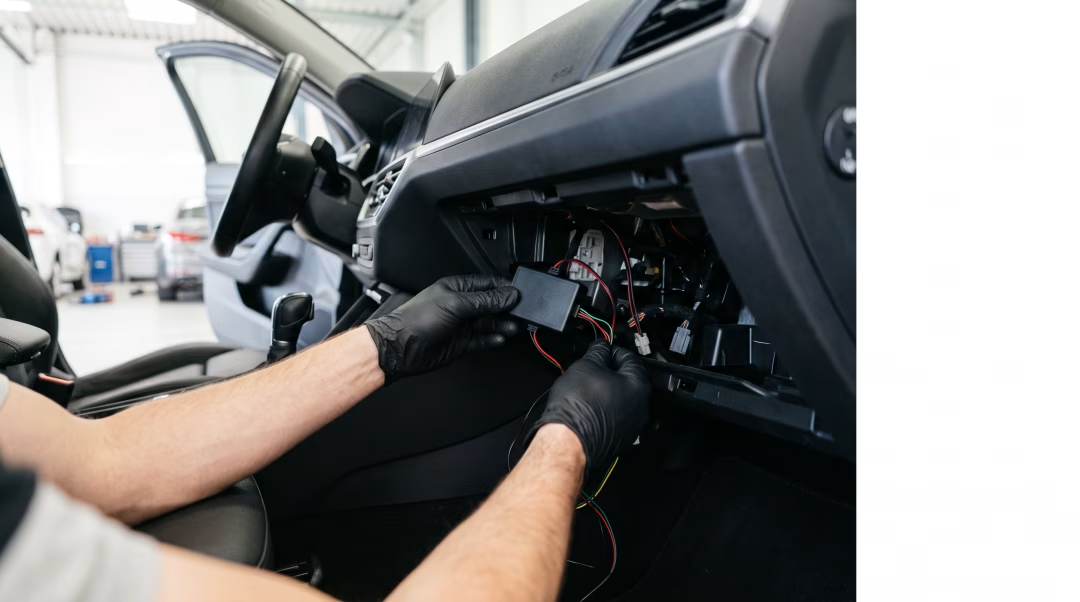
A Deep Dive into Payment Assurance Technology for BHPH Dealers
In the world of in-house financing, the vehicle is more than just a product; it is the collateral that secures the loan. Protecting this asset is essential for maintaining a healthy portfolio. Payment assurance technologies like GPS trackers and starter interrupt devices are designed to give dealers greater control over their assets after they leave the lot. These tools are not just about recovery; they are about risk mitigation. By improving your ability to communicate with customers and locate collateral when necessary, you can significantly reduce delinquency rates and lower the high costs associated with vehicle repossessions.
Understanding GPS Tracking Devices
A GPS (Global Positioning System) tracking device is a small unit installed discreetly within a vehicle. It uses satellite signals to pinpoint the vehicle's exact location, which can then be viewed on a computer or mobile device. For BHPH dealers, its primary function is to simplify the recovery process if a customer defaults on their loan.
- Simplified Vehicle Recovery: The most significant benefit is knowing a vehicle's precise location. This drastically reduces the time and expense involved in repossession, making the work of recovery agents more efficient and successful.
- Geofencing Capabilities: Many modern GPS units allow you to set up virtual boundaries, or geofences. You can receive an alert if a vehicle enters or leaves a specific area, such as a state border, a port, or an impound lot.
- Proactive Alerts: Advanced devices can send notifications for events like the battery being disconnected or the device being tampered with, giving you an early warning of potential issues.
- Improved Portfolio Management: The data from GPS devices can offer insights beyond simple location tracking, helping you build a more effective collections strategy.
However, GPS devices are primarily a reactive tool. They do not prevent a customer from missing a payment; they only make it easier to deal with the consequences. The hardware and monthly service fees can also represent a significant ongoing expense, which must be factored into the cost of each deal.
Exploring Starter Interrupt Devices (SIDs)
A starter interrupt device, often called a payment reminder device, is wired into a vehicle's starter system. If a customer misses a payment deadline, the dealer can send a signal to the device to prevent the vehicle from starting. Typically, the customer receives a warning—often an audible beep inside the car—before the disable command is sent, giving them an opportunity to pay.
- Direct Payment Incentive: The prospect of being unable to use their vehicle is a powerful motivator for customers to stay current on their payments. This makes SIDs a proactive collections tool.
- Reduced Collections Activity: Because the device automates a key part of the reminder process, it can reduce the number of collection calls your staff needs to make, freeing them up for other tasks.
- Lower Repossession Rates: By encouraging on-time payments, SIDs can lead to fewer defaults and, consequently, fewer repossessions, which is a better outcome for both the dealer and the customer.
The main drawbacks of SIDs revolve around legal and customer-relations issues. The laws governing the use of these devices vary significantly by state, and improper use can lead to severe legal penalties. Some customers may also view the technology as overly aggressive, which could harm your dealership's reputation. Furthermore, a standard SID without GPS functionality does not help you locate the vehicle if the customer ultimately defaults and abandons it.
Key Comparison Points: GPS vs. Starter Interrupt
When deciding which technology is right for your dealership, it is helpful to compare them across several key areas.
Functionality and Purpose
A GPS is a location tool. Its purpose is to answer the question, "Where is my asset?" It is passive until you need to find the vehicle. A starter interrupt is a payment-enforcement tool. Its purpose is to answer the question, "How can I ensure my customer pays on time?" It is an active part of the collections process.
Legal and Compliance Considerations
Both technologies require careful disclosure in all financing contracts. However, SIDs face much stricter legal scrutiny. Some states have specific laws outlining when and how a vehicle can be disabled, while others have ambiguous regulations that create a legal gray area. It is crucial to work with a dealer compliance attorney to ensure your policies are fully compliant with all local, state, and federal laws, including repossession regulations.
Customer Experience
A GPS device operates in the background and has no direct impact on the customer's daily use of the vehicle. As long as it is disclosed properly, most customers accept it as a standard part of the financing agreement. A starter interrupt, by its nature, can create a more confrontational and negative experience if a customer misses a payment. While effective, this can strain the customer relationship and may reduce the likelihood of repeat business or referrals.
Cost and ROI
The cost structures can differ. GPS devices often have a higher upfront hardware cost and an ongoing monthly data plan fee. SIDs may have a lower hardware cost and minimal ongoing fees. The return on investment (ROI) for GPS comes from lower recovery costs and higher recovery rates. The ROI for SIDs comes from improved cash flow and lower delinquency rates. Many dealers find that the cost of either device is easily offset by the savings from just one or two prevented charge-offs.
Hybrid Devices: The Comprehensive Solution
Recognizing the distinct advantages of each technology, many providers now offer hybrid devices that combine GPS tracking with starter interrupt capabilities. These units give dealers the best of both worlds: the proactive payment reminders of an SID and the reactive location tracking of a GPS. This allows you to use the starter interrupt feature to encourage payments while always having the backup of real-time location data if a vehicle needs to be recovered. While these devices are typically the most expensive option, they provide the most comprehensive risk management solution available.
Ultimately, the choice between GPS, starter interrupt, or a hybrid device depends on your dealership's specific needs. Consider your portfolio's risk profile, your state's legal environment, and your overall business philosophy. A thorough comparison of vendors and their features will help you select a partner that can provide the technology and support necessary to protect your assets and grow your business.
What is the primary difference between a GPS tracker and a starter interrupt device?
A GPS tracker is a location device. Its main purpose is to tell you where your vehicle is, which is crucial for efficient repossession. A starter interrupt device is a payment enforcement tool. Its purpose is to prevent the vehicle from starting if a payment is missed, directly encouraging the customer to pay.
Are starter interrupt devices legal for BHPH dealers to use?
The legality of starter interrupt devices varies widely by state. Some states have clear regulations governing their use, while others do not. It is absolutely essential to consult with a qualified compliance attorney to understand the specific laws in your jurisdiction before implementing SIDs to avoid significant legal risks.
Can a GPS device be used for more than just repossessions?
Yes. Many advanced GPS systems offer features like geofencing (alerting you if a vehicle crosses a set boundary), tamper alerts, and mileage tracking. This data can be used to monitor asset use, receive early warnings of potential skips, and inform your overall collections and risk management strategies.
How should I disclose the use of these devices to my customers?
Full transparency is critical. You must clearly and conspicuously disclose the presence and function of any tracking or disabling device in your retail installment contract and other financing documents. The customer must consent to its use in writing. Vague or hidden disclosures can lead to legal challenges.
Which device is better for maintaining a positive customer relationship?
Generally, a GPS device is less intrusive than a starter interrupt. Since it operates silently in the background, it does not directly interfere with the customer's use of their vehicle. A starter interrupt, while an effective collections tool, can create a negative experience by disabling the car, which may damage the long-term relationship and reduce the chance of repeat business.
