

to Independent Used Car Lots
When you are navigating the pre-owned vehicle market, one of the biggest decisions is where to shop. The choice often comes down to two primary options: purchasing a vehicle from an OEM Certified Pre-Owned (CPO) program at a franchise dealership or buying from an independent used car lot. Each path offers a distinct set of advantages and considerations. An OEM certified vehicle comes with the backing of the original manufacturer, promising a rigorously inspected car with a factory warranty. In contrast, an independent lot provides a wider selection of makes and models, often at more competitive price points. Understanding the fundamental differences in inspection processes, warranty coverage, and overall value is crucial. This guide will break down how these two options compare, empowering you to choose the route that best aligns with your budget, needs, and desired level of peace of mind for your next vehicle purchase.
Ultimately, neither option is universally superior; the best choice is entirely dependent on your personal priorities as a car buyer. If you value a manufacturer-backed guarantee and a nearly new ownership experience, a CPO vehicle is a compelling choice. If your focus is on maximum value, a wider selection, and you are comfortable with conducting your own due diligence, the inventory at an independent dealership can offer significant savings. By weighing these factors, you can drive off the lot with confidence, knowing you have made an informed decision.
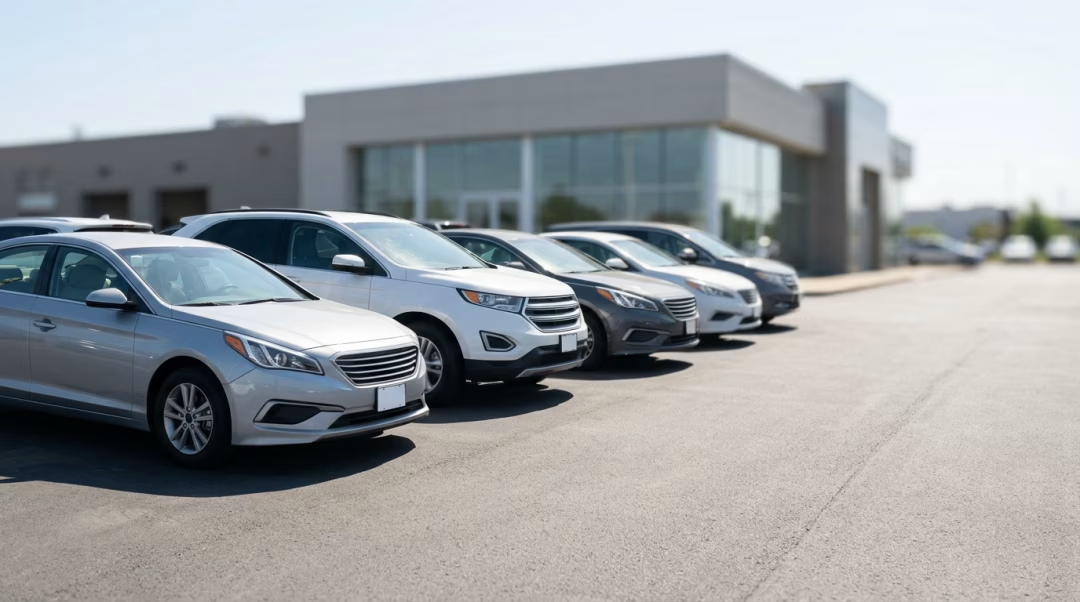
A Deep Dive into CPO Programs and Independent Lots
Choosing where to buy your next used vehicle is just as important as choosing the vehicle itself. The dealership experience, the quality of the inventory, and the after-sale support you receive can vary dramatically. The two most common options are franchise dealerships offering manufacturer Certified Pre-Owned (CPO) programs and independent used car lots. While both sell pre-owned vehicles, their approach, standards, and the products they offer are fundamentally different. Let's explore the details of each to help you determine which is the right fit for your automotive journey.
What Exactly is an OEM Certified Pre-Owned (CPO) Program?
An Original Equipment Manufacturer (OEM) Certified Pre-Owned program is a system created and backed by the car manufacturer itself. These are not simply used cars with a fancy sticker; they represent the highest tier of pre-owned vehicles available. To qualify for a CPO program, a vehicle must meet a strict set of criteria before it is even considered for the certification process.
- Strict Age and Mileage Limits: Typically, a vehicle must be under a certain age (e.g., five or six years old) and have fewer than a specified number of miles (e.g., 80,000 miles).
- Clean Vehicle History: The car must have a clean, non-branded title and a comprehensive vehicle history report that shows no major accidents or frame damage.
- Comprehensive Multi-Point Inspection: This is the cornerstone of any CPO program. A factory-trained technician conducts an exhaustive inspection, often covering 150 to 200+ specific points, from the engine and transmission to the electrical systems and interior trim.
- Reconditioning with OEM Parts: If any part fails the inspection, it is repaired or replaced using genuine OEM parts to ensure the vehicle meets the manufacturer's original standards.
The primary benefit of buying CPO is the peace of mind that comes with a manufacturer-backed warranty. This extends the original powertrain and bumper-to-bumper coverage, providing protection against unexpected repair costs. Additionally, CPO vehicles often come with perks like 24/7 roadside assistance, complimentary maintenance, and access to special, low-interest financing rates directly from the manufacturer's finance division. You can learn more about us and our commitment to quality vehicles.
The Advantages of an Independent Used Car Lot
Independent used car lots operate outside the franchise system. They are free to acquire and sell vehicles of any make, model, year, or mileage. This freedom is their greatest strength, offering a different kind of value proposition to car shoppers.
The most significant advantage is selection. At an independent dealership, you can find a Ford next to a Honda, a luxury SUV next to an economical sedan. This is ideal for buyers who are not loyal to a single brand and want to compare different options side-by-side. You can browse our diverse used inventory to see the variety we offer across all our locations.
Price is another major factor. Without the overhead costs associated with manufacturer certification, inspections, and OEM parts, independent dealers can often price their vehicles more competitively. This can result in substantial savings for the consumer. Furthermore, there is often more room for negotiation on the final price. While reputable independent dealers perform their own safety inspections and reconditioning, the standards are not dictated by a manufacturer, which allows for more cost-effective solutions.
Head-to-Head Comparison: Key Areas of Difference
To make the best decision, it is helpful to compare these two options directly across several key categories.
Warranty and Protection
A CPO vehicle's warranty is backed by the carmaker, meaning any franchise dealer for that brand nationwide can perform covered repairs. This is a significant advantage for those who travel or move. An independent lot may sell a vehicle "as-is," with a limited 30 or 60-day dealer warranty, or offer a third-party extended service contract for an additional cost. These third-party plans can be excellent, but their quality and coverage vary widely, so it is crucial to read the fine print.
Vehicle Quality and Reconditioning
The CPO process is standardized and transparent. You know exactly what was inspected and that genuine parts were used for any repairs. At an independent lot, the quality of reconditioning depends entirely on the dealer's own standards. Many excellent independent dealers take pride in their work, but the process is not uniform across the industry. This makes a pre-purchase inspection by a trusted mechanic even more important when buying from an independent dealer.
Financing and Overall Cost
While the sticker price of a CPO car is typically higher, they often qualify for subsidized, low-APR financing rates that are unavailable for standard used cars. Over the life of a loan, a lower interest rate could make the total cost of a CPO vehicle very competitive. Independent dealers work with a network of banks, credit unions, and other lenders. While they can secure financing for nearly any credit situation, the interest rates may be higher than the special promotional rates from a manufacturer. You can get a head start by filling out our online applications form.
Shopping Experience
Shopping for a CPO vehicle means visiting a franchise dealership for that specific brand. If you are considering multiple brands, you will need to visit multiple dealerships. An independent lot offers a one-stop-shop experience where you can test drive a variety of makes and models in a single visit. If you are looking to trade in your current car, you can easily value my trade with us online.
Frequently Asked Questions
Is a CPO car the same as a regular used car?
No, they are not the same. A CPO car has passed a rigorous, manufacturer-specified multi-point inspection and includes a factory-backed extended warranty. A regular used car, while it may be in excellent condition, does not come with these manufacturer guarantees and has not undergone the same standardized certification process.
Can I buy a CPO vehicle at an independent lot?
No. True OEM Certified Pre-Owned status can only be granted and sold by a franchised dealership representing that specific brand. An independent dealer might use terms like "certified," but this refers to their own internal inspection process, not the manufacturer's official program.
Are third-party warranties from independent dealers any good?
The quality of third-party warranties, also known as vehicle service contracts, can vary significantly. Reputable plans offer comprehensive coverage similar to a factory warranty, but others may have high deductibles, limited coverage, or strict repair facility requirements. It is essential to carefully read the contract to understand what is covered before purchasing one.
Why are CPO cars more expensive than non-certified ones?
The premium price of a CPO vehicle accounts for several factors. This includes the cost of the comprehensive inspection, the expense of reconditioning the vehicle with genuine OEM parts, and the price of the manufacturer-backed extended warranty that is included with the purchase. You are paying for a higher level of quality assurance and peace of mind.
Does a clean vehicle history report mean a car is in perfect condition?
Not necessarily. A clean vehicle history report is a crucial tool that indicates no major reported accidents, title issues, or odometer discrepancies. However, it does not report on all mechanical issues or minor cosmetic damage. It should always be used in combination with a thorough test drive and a professional pre-purchase mechanical inspection. For any further questions, please contact us.
