

Buy Here Pay Here Dealerships
Understanding the operational dynamics of a Buy Here Pay Here (BHPH) dealership, especially concerning payment recovery, can provide valuable insights for customers. While no one wants to face financial challenges, knowing how the process works can help you navigate situations effectively. Our dealership aims for transparency and clear communication, always striving to find solutions that keep you on the road. Recovery agents play a specific, necessary role within the broader framework of managing financed vehicles, particularly when payment arrangements cannot be maintained. This page will demystify their function, explain their relationship with BHPH dealerships, and highlight how proactive communication can often prevent the need for their involvement, ensuring you understand every step.
Our primary goal is to foster successful vehicle ownership for every customer. We believe that informed customers are empowered customers. By understanding the processes, including the rare instances when recovery agents become involved, you equip yourself with knowledge. We encourage open dialogue and invite you to explore our Contact Us page or learn more about our application process if you have any questions about vehicle financing or payment solutions.
Understanding the Buy Here Pay Here Model and Vehicle Recovery
Buy Here Pay Here (BHPH) dealerships specialize in helping individuals secure vehicle financing, often when traditional lenders cannot. This model offers an invaluable path to car ownership for those with less-than-perfect credit, working directly with customers to provide an in-house financing solution. At its core, the BHPH model is built on direct relationships, where the dealership both sells the vehicle and services the loan. This direct connection means we are deeply invested in your success. However, like any financing arrangement, there are terms and conditions, and a clear understanding of the payment process is crucial.
The goal for every BHPH dealership is to ensure customers successfully complete their payment obligations and enjoy their vehicle. Repossession is always considered a last resort, a measure taken only after all other communication and resolution attempts have been exhausted. It is an unfortunate outcome that dealerships work diligently to avoid, as it represents a loss for both the customer and the business. Our focus remains on helping you maintain your payments and your vehicle. We encourage proactive communication if you foresee or experience challenges with your payments.
The Role of Recovery Agents in the BHPH Ecosystem
Recovery agents, often referred to as repossession agents, are independent contractors or specialized firms that work on behalf of lenders, including BHPH dealerships, to retrieve vehicles when a loan goes into default. Their primary function is to locate and secure collateral—in this case, your vehicle—following a lender's legal instructions. It is important to note that recovery agents do not make the decision to repossess; they merely execute the directive from the dealership based on the loan agreement terms.
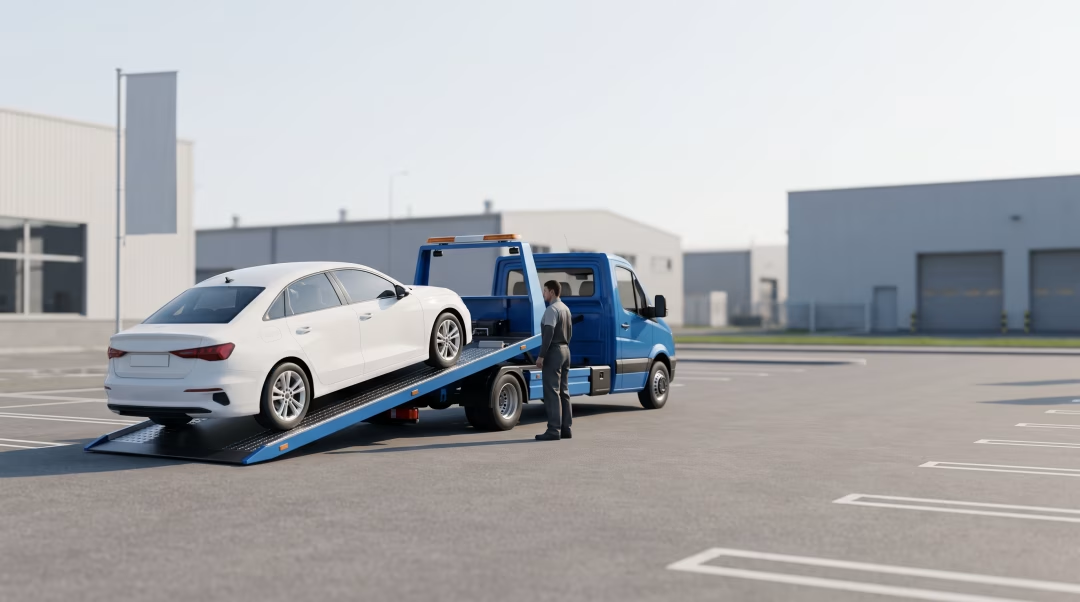
When a customer consistently fails to make agreed-upon payments, and attempts by the dealership's collections team to reach a resolution are unsuccessful, the loan officially enters default. At this point, the dealership may contract a recovery agent to repossess the vehicle. The process is governed by state and federal laws, which dictate how and when a repossession can occur. Recovery agents are trained to operate within these legal boundaries, ensuring the process is conducted safely and lawfully. They typically use specialized equipment, such as tow trucks, to secure the vehicle and transport it to a designated lot.
The relationship between a BHPH dealership and a recovery agent is one of partnership, focused on mitigating losses after a contractual default. While the thought of a recovery agent is daunting, their involvement is a symptom of a breakdown in communication or payment, not an arbitrary action. Our dealership prioritizes building a strong collections process that aims to resolve issues long before an agent is needed, often by offering solutions like payment extensions where feasible.
The Repossession Process: What to Expect
Understanding the steps involved in a potential repossession can help clarify the situation and highlight opportunities for intervention. The process typically unfolds as follows:
- Missed Payments and Communication: The first step in any payment issue is usually a missed payment. Our dealership will initiate contact to understand the situation and discuss potential solutions. This is the most crucial stage for communication.
- Loan Default: If payments continue to be missed and no resolution is reached, the loan will formally enter default status, as defined in your loan agreement. The specific number of missed payments or days past due to trigger default can vary by contract and state law.
- Notice of Intent to Repossess: In many states, the lender is required to send a notice of their intent to repossess the vehicle, providing a final opportunity to cure the default. This notice will outline the balance due and the deadline for payment. It is important to review your contract and understand your state's specific repossession laws.
- Assignment to Recovery Agent: If the default is not cured by the specified deadline, the dealership will formally assign the case to a recovery agent. The agent then begins the process of locating and retrieving the vehicle.
- Vehicle Recovery: The recovery agent will locate the vehicle and take possession of it. Repossessions can occur at any time, day or night, and typically take place where the vehicle is found. Agents are generally prohibited from breaching the peace (e.g., using physical force, threatening you, breaking into a locked garage without permission).
- Post-Repossession Notification: After the vehicle is recovered, the dealership must send you another notice, detailing what steps you can take, such as redeeming the vehicle or understanding its sale. It will also outline how to reclaim any personal belongings left in the vehicle.
- Sale of Vehicle: If the vehicle is not redeemed, the dealership will typically sell it, usually at auction, to recoup some of the outstanding loan balance.
- Deficiency Balance: If the sale price of the vehicle does not cover the remaining loan balance plus repossession and sale costs, you may still be liable for the "deficiency balance."
Your Rights and Responsibilities During Vehicle Recovery
Even when facing a difficult situation like repossession, you have certain rights and responsibilities. Knowing these can help you navigate the process more effectively:
- Right to Cure: In some states, you may have a "right to cure" the default by paying the overdue amount plus any late fees before repossession.
- Right to Personal Property: You have the right to retrieve any personal belongings left inside the repossessed vehicle. Dealerships must have a process for this.
- Right to Redeem: You typically have a right to "redeem" the vehicle by paying the entire outstanding loan balance, plus any repossession and storage fees, before it is sold.
- Right to Notice of Sale: The dealership must provide you with notice of how and when the vehicle will be sold.
- Responsibility to Communicate: Your most important responsibility is to communicate with the dealership if you are having trouble making payments. Many issues can be resolved with open dialogue. Our team is dedicated to finding flexible payment solutions when possible.
- Responsibility for Deficiency: If a deficiency balance remains after the vehicle's sale, you are generally responsible for paying it.
Preventing Repossession: Proactive Steps
The best way to deal with repossession is to avoid it entirely. Here are steps you can take if you are struggling with payments:
- Communicate Early: As soon as you anticipate a problem with making a payment, contact our finance team. We are here to help and explore options.
- Explore Payment Plans: We may be able to work with you on a temporary payment arrangement or extension.
- Understand Your Contract: Familiarize yourself with the terms of your loan agreement, particularly regarding default and repossession clauses.
- Voluntary Repossession: In some cases, if you determine you absolutely cannot make payments, a voluntary repossession might be an option. While still impacting your credit, it can sometimes reduce the costs associated with an involuntary repossession. Discuss this thoroughly with our team.
Our dealership is committed to helping our customers succeed. We understand that life can present unexpected challenges. When you choose a vehicle from our used inventory, you are not just getting a car; you are gaining a partner dedicated to supporting your journey. Proactive engagement with our team can often prevent escalations and lead to more favorable outcomes for everyone involved.
Frequently Asked Questions About Recovery Agents and BHPH Dealerships
What triggers a BHPH dealership to use a recovery agent?
A BHPH dealership typically uses a recovery agent after a customer has defaulted on their loan agreement, meaning they have missed a specified number of payments and have not responded to the dealership's attempts to resolve the issue. The decision to involve a recovery agent is usually a last resort, made after the dealership's internal collections efforts have been exhausted and no alternative payment arrangement could be reached.
Are there laws that govern how recovery agents operate?
Yes, recovery agents must operate within strict state and federal laws. These laws dictate aspects such as permissible times for repossession, requirements for providing notice, and prohibitions against "breaching the peace" (e.g., using physical force or threats). It is important to know your rights, and we always advise customers to understand the specific repossession laws in your state.
Can I get my personal belongings back after a vehicle is repossessed?
Absolutely. You have a legal right to retrieve any personal property left inside a repossessed vehicle. The dealership is obligated to notify you about how and when you can pick up your belongings. We ensure a clear process is in place to facilitate the return of your personal items.
What is a deficiency balance and will I have to pay it?
A deficiency balance occurs if the amount the dealership receives from selling your repossessed vehicle (usually at auction) is less than the total outstanding loan balance plus all repossession, storage, and sale costs. If there is a deficiency, you are typically legally responsible for paying that remaining amount. We work to provide transparency regarding these potential outcomes.
What can I do to avoid repossession if I am having payment difficulties?
The most important step is proactive communication. Contact our finance team as soon as you anticipate or experience difficulty making a payment. We are often able to discuss options such as temporary payment extensions, revised payment schedules, or other solutions to help you get back on track. Ignoring the problem will only worsen the situation. Learn more about reducing delinquency rates with proactive steps.
