

Automotive Reconditioning Vendors
Selecting the right automotive reconditioning vendor is one of the most critical decisions a dealership can make to protect its bottom line and accelerate inventory turn. The speed and quality of your recon process directly impact how quickly a vehicle moves from acquisition to frontline-ready, influencing customer perception and overall profitability. A subpar vendor can lead to costly delays, inconsistent quality, and missed sales opportunities, while a strategic partner becomes an extension of your team, dedicated to enhancing vehicle value and streamlining your operations. Understanding how to thoroughly compare and vet potential vendors is not just about finding a service provider; it is about building a partnership that drives efficiency and growth. This guide will walk you through the essential criteria for making an informed choice, ensuring every vehicle on your lot represents the highest standard of quality and appeal for potential buyers.
Making a strategic choice in a reconditioning partner goes beyond comparing simple price lists. The right vendor relationship is a cornerstone of operational excellence, directly contributing to higher gross profits and improved customer satisfaction. By focusing on key performance indicators like turnaround time, quality consistency, and transparent communication, you can forge a partnership that minimizes delays and maximizes the retail value of your inventory. This diligence ensures your vehicles are presented in their best light, helping you build a stronger brand reputation in a competitive market.
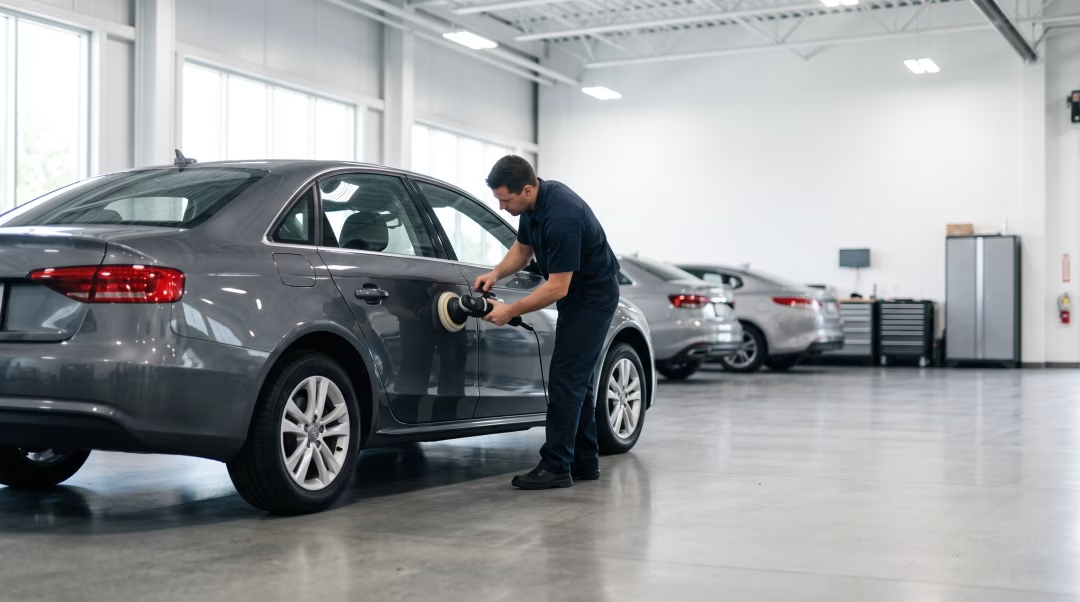
A Deep Dive into Vetting and Selecting Recon Partners
The journey of a used vehicle from trade-in or auction to the front sales line is a race against time. Every day a car sits waiting for reconditioning, it accrues holding costs and depreciates in value. This is why the process of evaluating and choosing reconditioning vendors is a high-stakes decision for any dealership. A proficient vendor can significantly shorten this cycle, while an inefficient one creates bottlenecks that ripple through your entire operation. To build a robust and profitable reconditioning pipeline, you must move beyond surface-level comparisons and analyze potential partners across a spectrum of crucial business metrics.
This detailed guide will provide a framework for a comprehensive evaluation, empowering you to ask the right questions, identify potential red flags, and ultimately select a vendor that aligns with your dealership's standards for quality, speed, and financial performance. Learn more about us and our commitment to helping dealers succeed.
Core Criteria for Vendor Comparison
A successful vendor partnership is built on more than just a handshake and a price sheet. It requires a deep alignment of capabilities and expectations. Use these core criteria as your checklist when comparing potential reconditioning services.
- Turnaround Time and Efficiency: This is arguably the most critical metric. Ask potential vendors for their average days-to-frontline time. A provider that can consistently turn vehicles around in just a few days is immensely more valuable than a cheaper one that takes a week or more. Discuss their workflow management. How do they handle intake, approvals for unexpected repairs, and final quality control to ensure no time is wasted? An efficient process directly impacts your holding costs and inventory turn, a key topic we explore in our article on how to reduce days to frontline ready time.
- Quality and Consistency of Work: A vehicle that looks great sells faster and for more money. But quality cannot be a one-time event; it must be consistent across every car, from a budget-friendly sedan to a high-end SUV. Request to inspect vehicles they have recently completed for other clients. Look closely at paint matching, interior detailing, and the finish on wheel repairs. A top-tier vendor has rigorous quality control checks in place to ensure every job meets a predefined standard before it leaves their hands.
- Comprehensive Scope of Services: Juggling multiple vendors for different tasks—one for dents, another for detailing, and a third for interior work—is inefficient and complicates billing. Look for a vendor that offers a comprehensive suite of services. This can include paintless dent repair (PDR), bumper and wheel repair, interior restoration, glass repair, and full detailing. A single-source partner simplifies logistics, streamlines communication, and often provides cost savings through bundled pricing.
- Transparent Pricing and Billing: The lowest price is not always the best value. Scrutinize each vendor's pricing structure. Do they offer clear, line-item estimates, or is their pricing vague? Ask about potential upcharges for difficult jobs or specific vehicle types. A trustworthy partner provides transparent, easy-to-understand invoices and is upfront about all costs. This financial clarity is essential for accurately balancing reconditioning costs against resale value.
- Technology and Communication Protocols: In today's fast-paced environment, modern vendors leverage technology to improve efficiency. Do they use a software platform for creating estimates, getting digital approvals, and tracking a vehicle's progress? This can eliminate communication delays and provide you with real-time status updates. Clear communication channels are vital. Who is your dedicated point of contact? How quickly do they respond to inquiries or issues? A lack of streamlined communication is often one of the first red flags to watch for when vetting a new vendor.
- Insurance, Licensing, and Compliance: Never overlook the administrative fundamentals. Verify that any potential vendor carries sufficient garage liability insurance to protect your assets while they are in their care. Confirm they hold all necessary local and state business licenses. Additionally, ensure they adhere to all environmental regulations regarding the use and disposal of chemicals and materials. A compliant and properly insured partner protects your dealership from significant liability risks.
The Strategic Vetting Process: From Research to Trial
Once you have established your criteria, it is time to implement a structured vetting process. This methodical approach ensures you gather comparable information from each candidate and make a decision based on data, not just a sales pitch.
First, conduct initial research through industry networks, online reviews, and asking for referrals from non-competing dealers. Once you have a shortlist, formalize the process by issuing a Request for Proposal (RFP). A well-crafted RFP should detail your average monthly volume, your required scope of services, and your expectations for turnaround time. This ensures you receive apples-to-apples quotes. Our guide on what to include in a vendor RFP can help you structure this document effectively.
Next, insist on site visits or in-person demonstrations. Seeing their operation firsthand provides invaluable insight into their organization, cleanliness, and workflow. For mobile vendors, ask them to perform a demonstration on one of your own vehicles. This allows you to assess their quality and professionalism directly. Follow this up with thorough reference checks. Speak with at least two or three of their current dealership clients. Ask specific questions about their reliability, communication, and how they handle problems when they arise.
Finally, before committing to a long-term agreement, negotiate a trial period. A 30 to 60 day trial allows you to experience their service in a real-world setting without significant risk. This is the ultimate test of their ability to deliver on their promises. Clearly define the key performance indicators (KPIs) you will use to judge their performance during the trial, such as average turn time and quality acceptance rate. This is a critical step in learning how to negotiate better terms and build a lasting, successful partnership. If you have any questions during your search, do not hesitate to contact us for guidance.
What is the most important factor when choosing a reconditioning vendor?
While quality and cost are crucial, the single most important factor is often turnaround time. Every day a vehicle is in reconditioning, it costs the dealership money in holding costs and depreciation. An efficient vendor who can consistently reduce your days-to-frontline will have the most significant positive impact on your profitability.
Should I choose a mobile vendor or a fixed-location shop?
This depends on your dealership's volume and space. Mobile vendors offer convenience by performing work on-site, which can reduce vehicle movement and speed up the process. Fixed-location shops may have more specialized equipment for larger jobs. Often, a hybrid approach works best, using mobile vendors for common tasks like PDR and detailing, and a fixed shop for more extensive body or paint work.
How can I track a vendor's performance over time?
The best way to track performance is by establishing key performance indicators (KPIs) from the start. Key metrics to monitor include average turnaround time per vehicle, the percentage of work that passes your quality control check on the first inspection, and cost per vehicle. Reviewing these metrics with your vendor monthly or quarterly helps maintain accountability and ensures they continue to meet your standards.
Is the cheapest reconditioning vendor always the best choice?
Almost never. The cheapest vendor often cuts corners, leading to lower quality work that can devalue a vehicle or require costly re-work. They may also be slower, which increases your holding costs and negates any initial savings. It is far better to focus on the overall value, which includes speed, quality, and reliability, rather than just the initial price.
What are some red flags to watch for when vetting a new vendor?
Key red flags include vague or inconsistent pricing, an inability to provide solid references from other dealerships, a lack of proper insurance documentation, and poor communication during the vetting process. If they are slow to respond or disorganized before they have your business, it is unlikely to improve once you are a client.
