

Affect Vehicle Recovery Timelines
When a vehicle needs to be recovered, the process involves more than simply locating it and driving away. Two of the most significant and often unpredictable factors that influence the timeline are weather and geography. From severe winter storms that make roads impassable to the unique challenges of navigating dense urban centers or remote rural landscapes, environmental conditions play a crucial role. Understanding how these elements can cause delays is essential for managing expectations. A recovery that might take hours in ideal conditions can extend into days or even weeks when faced with extreme weather or a hard-to-reach location. Our team navigates these complexities daily, leveraging experience and technology to ensure the process is as efficient and safe as possible, regardless of what Mother Nature or the map presents. Exploring these variables helps clarify why timelines can differ so dramatically from one case to the next.
The interplay between a vehicle's location and the prevailing weather creates a unique set of circumstances for every recovery operation. Navigating the logistical maze of a packed city during a downpour presents different obstacles than accessing a vehicle on a remote, unpaved road after a snowstorm. These environmental factors directly impact agent safety, equipment effectiveness, and overall accessibility. Consequently, they are primary drivers of the timeline, requiring careful planning and adaptability to overcome the challenges they pose to a swift and successful recovery.
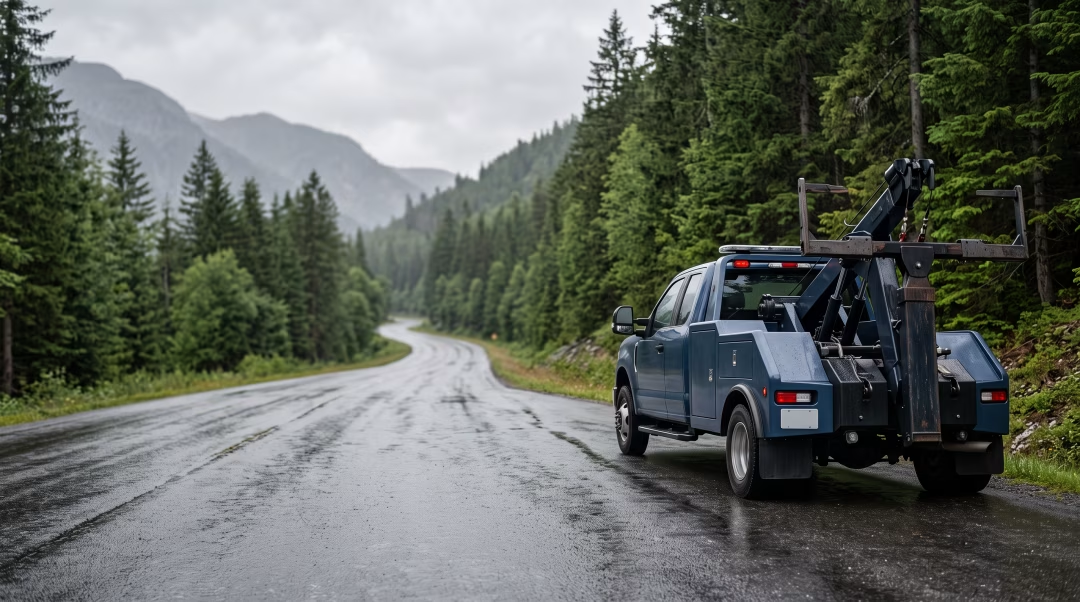
A Deeper Look into Environmental Effects on Vehicle Recovery
The process of vehicle recovery is a complex logistical puzzle where every piece must fit perfectly for a timely resolution. However, external factors beyond anyone's control can drastically alter the board. Weather and physical location are two of the most powerful variables that can dictate the pace and success of a recovery. While technology has provided incredible tools for locating assets, it cannot pave a flooded road or clear a mountain pass blocked by snow. Acknowledging these real-world constraints is the first step toward understanding why a recovery timeline is often a dynamic estimate rather than a fixed appointment. Every scenario, from a metropolitan area experiencing a heatwave to a rural county dealing with icy conditions, brings a distinct set of operational challenges that must be safely and methodically addressed.
The Direct Impact of Severe Weather on Recovery Operations
Inclement weather is perhaps the most common cause of significant delays in vehicle recovery. The safety of recovery agents and the public is the absolute top priority, and certain conditions make proceeding with an operation irresponsible and dangerous. A comprehensive understanding of how different weather events affect timelines is essential.
- Winter Storms and Ice: Blizzards, heavy snowfall, and freezing rain can bring recovery efforts to a complete standstill. Roads may become impassable, and even if a vehicle is accessible, the risk of accidents during towing is extremely high. In many northern states, entire regions can be shut down for days, making any recovery attempt impossible until conditions improve and roads are cleared.
- Hurricanes and Tropical Storms: In coastal areas, the threat of hurricanes can halt operations long before the storm makes landfall. Evacuation orders must be followed, and recovery agents, like all residents, must prioritize their safety. After the storm passes, widespread flooding, downed trees, and power outages can make entire neighborhoods inaccessible for weeks, creating a significant backlog of recovery assignments.
- Flooding and Heavy Rain: Flash floods and prolonged heavy rainfall can wash out roads, submerge vehicles, and create dangerous driving conditions. Attempting to recover a vehicle from a flooded area is often not feasible until the water recedes, and the safety of the surrounding infrastructure can be verified.
- Tornadoes and Severe Thunderstorms: These events are often unpredictable and can cause localized but catastrophic damage. The immediate aftermath is a time for emergency response, not asset recovery. Debris-filled streets and damaged infrastructure can prevent access long after the storm has passed.
Beyond these major events, even day-to-day weather like dense fog can reduce visibility and increase risks, leading agents to postpone a recovery until conditions are safer. As discussed in our article about how weather affects insurance costs, these events have wide-ranging impacts on the automotive industry.
How Geographic Location Creates Unique Recovery Challenges
The physical location of a vehicle is just as critical as the weather. The difference between recovering a car from a suburban driveway versus one located deep in a rural area is immense. Each environment has its own logistical hurdles that influence the recovery timeline.
Urban vs. Rural Environments: A Tale of Two Recoveries
In densely populated urban areas, recovery agents face challenges like heavy traffic, one-way streets, and limited parking. The vehicle may be located in a secured parking garage with restricted access or on a narrow street where a tow truck cannot easily maneuver. While the road network is extensive, navigating it can be slow and time-consuming, especially during peak hours. Privacy is also a greater concern, and operations must be conducted with discretion to avoid conflict or neighborhood disruption.
Conversely, rural and remote locations present an entirely different set of problems. The primary issue is often accessibility. A vehicle might be miles down a poorly maintained dirt or gravel road, which can become impassable after rain or snow. GPS signals can be unreliable, and cell service may be nonexistent, complicating communication and verification. The sheer distance that must be traveled adds significant time to the operation before the agent even arrives on-site. For more information on the legalities that vary by region, it is important to understand repossession laws by state.
The Role of Topography and Infrastructure
The natural landscape, or topography, also plays a key role. Mountainous regions involve navigating steep grades, narrow winding roads, and the potential for rockslides or washouts. In desert areas, extreme heat can take a toll on both agents and equipment, while sandy or unpaved paths can pose a challenge for recovery vehicles. The quality of local infrastructure is a major factor as well. A well-maintained highway system allows for much faster travel than a network of aging county roads filled with potholes. The availability of resources and the familiarity of local agents with the area are crucial for overcoming these geographic obstacles efficiently.
Overcoming Delays with Technology and Expertise
While weather and location are formidable challenges, the vehicle recovery industry has evolved to mitigate their impact. Modern strategies combine advanced technology with on-the-ground expertise to streamline the process as much as possible. Advanced tools like those that reduce repossession costs through GPS tracking are invaluable. These systems provide real-time location data, which helps agents plan the most efficient route and confirms the vehicle's position before dispatching, saving time and resources.
Furthermore, experienced recovery companies maintain networks of agents who are local to their assigned territories. These agents possess invaluable knowledge of the local roads, typical weather patterns, and potential access issues. This local expertise is something no map or GPS can fully replicate and is critical for navigating complex situations. By combining precise location data with seasoned human intelligence, recovery operations can anticipate potential delays and develop contingency plans, ensuring that when a window of opportunity opens, they are ready to act swiftly and safely. Ultimately, understanding the factors that cause delays is key to appreciating the professionalism and planning that go into a successful recovery.
How do floods or hurricanes impact vehicle recovery timelines?
Floods and hurricanes cause major delays. Operations are paused for safety before the storm hits due to evacuation orders. Afterward, widespread flooding, road closures from debris, and power outages can make areas completely inaccessible for days or even weeks. Recovery efforts can only resume once emergency services declare the area safe and infrastructure is at least partially cleared, leading to a significant backlog and extended wait times.
Is it faster to recover a vehicle in a city or a rural area?
It depends on the specific circumstances. Urban recoveries can be delayed by traffic, secured parking garages, and limited access on narrow streets. Rural recoveries, however, can be slowed by long travel distances, poorly maintained roads that may be impassable, and a lack of reliable cell or GPS service. Generally, a straightforward suburban recovery is often the quickest, as it avoids the extremes of both environments.
Can snow and ice completely stop a vehicle recovery?
Yes, absolutely. Heavy snow, blizzards, and icy conditions can make roads impassable and recovery operations extremely dangerous. For the safety of the recovery agent and the public, operations are typically suspended until roads are plowed and conditions improve. In regions with severe winters, this can mean delays lasting for several days at a time.
How does a recovery agent deal with remote, hard-to-reach locations?
For remote locations, planning is key. Agents use satellite imagery and topographical maps to assess the route beforehand. They ensure their recovery vehicle is appropriate for the terrain, such as a four-wheel-drive truck. They also must account for poor or nonexistent cell service, often relying on local knowledge and planning their recovery during daylight hours for maximum visibility and safety.
Does the time of year affect how long a vehicle recovery takes?
The time of year has a significant effect. Winter often brings delays due to snow and ice in many parts of the country. Spring can bring heavy rains and flooding. Late summer and fall are hurricane season in coastal regions. Even extreme summer heat can create challenging working conditions. Each season presents predictable weather patterns that can influence and potentially delay recovery timelines.
