

Buy Here Pay Here Explained
Navigating the world of in-house dealership financing can be confusing, especially when you encounter terms like Buy Here Pay Here (BHPH) and Lease Here Pay Here (LHPH). Both are fantastic solutions for individuals facing credit challenges, offering a direct path to getting behind the wheel of a reliable vehicle. However, they operate on fundamentally different principles. Buy Here Pay Here is a straightforward auto loan where you purchase the vehicle and make payments directly to the dealership, building equity with every payment on your path to full ownership. In contrast, Lease Here Pay Here allows you to drive a newer vehicle for a set period with typically lower monthly payments, but you do not own the car at the end of the term. Understanding the core differences in ownership, cost, and responsibility is the first step in deciding which option aligns perfectly with your lifestyle, budget, and long-term goals.
The choice between leasing and buying through a dealership's in-house financing program comes down to one key factor: ownership. With a Buy Here Pay Here agreement, your payments go toward owning an asset. You have the freedom to drive as many miles as you want and customize the vehicle. With Lease Here Pay Here, your payments are essentially a long-term rental fee, giving you access to a newer car for a lower cost, but with certain restrictions like mileage caps. We are here to help you explore both options.
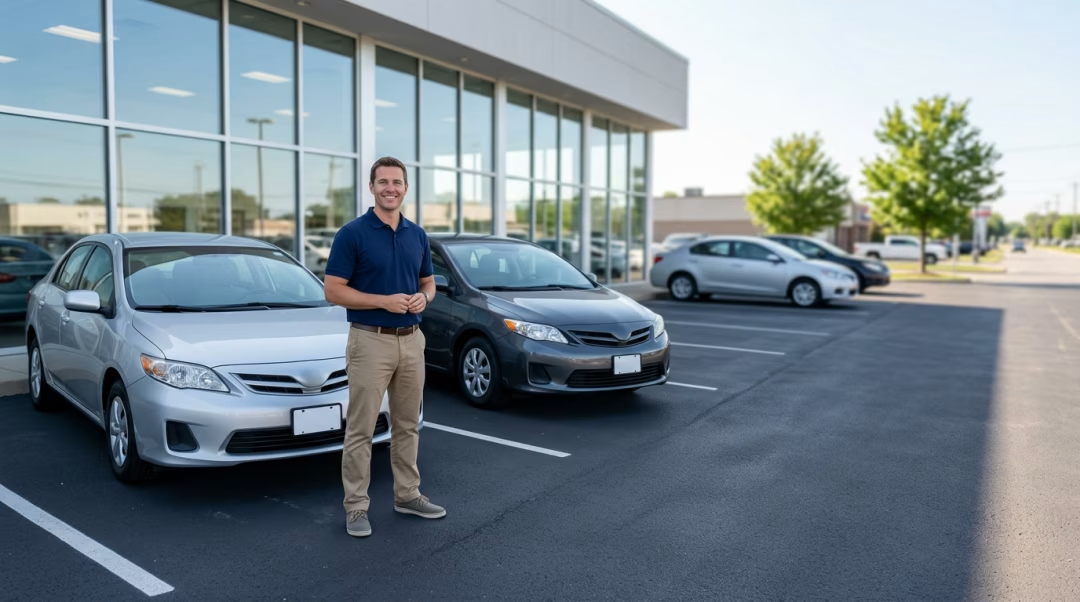
A Deeper Look into In-House Financing Options
For many car shoppers, securing traditional financing from a bank or credit union can be a significant hurdle, especially with a less-than-perfect credit history. This is where specialized dealerships step in to provide alternative solutions. Buy Here Pay Here has been a long-standing option, but the newer Lease Here Pay Here model is gaining popularity. Both programs are designed to put you in the driver's seat by acting as both the seller and the lender, but they cater to different needs and financial situations. Making an informed decision requires a thorough understanding of how each program works, from the initial down payment to what happens at the end of your term. Let’s break down the mechanics, benefits, and potential drawbacks of both BHPH and LHPH to give you a clear picture. For more information about our dealership, please see our about-us page.
What is Buy Here Pay Here (BHPH)?
Buy Here Pay Here is exactly what it sounds like: you buy the car from us, and you pay us directly. We are the dealership and the bank, all in one. This model streamlines the car-buying process for those who may not qualify for conventional auto loans. Instead of relying on a third-party lender's strict credit score requirements, we look at factors like your income stability and down payment to approve your financing. When you enter a BHPH agreement, you are signing a retail installment contract to purchase a vehicle from our used-inventory. Every payment you make reduces the principal balance of your loan and builds your equity in the vehicle. At the end of the loan term, after you have made all your payments, the title is transferred to your name, and the car is 100% yours.
The primary advantages of the BHPH model include:
- Path to Full Ownership: Your payments are an investment in an asset. Once the loan is paid off, you own the vehicle outright and can sell it, trade it, or drive it payment-free.
- No Mileage Restrictions: Since you are buying the car, you are free to drive as much as you want without worrying about excess mileage fees. This is ideal for those with long commutes or who enjoy frequent road trips.
- Freedom to Customize: The vehicle is yours to personalize. You can add accessories, upgrade the stereo, or make other modifications as you see fit.
However, it is also important to consider that BHPH vehicles are typically older models with more miles. As the owner, you are fully responsible for all maintenance and repairs that arise after the purchase, which can be an unpredictable expense. Monthly payments may also be higher than a lease because you are financing the vehicle's total purchase price.
Understanding Lease Here Pay Here (LHPH)
Lease Here Pay Here is a newer and more flexible alternative that applies the principles of leasing to the in-house financing world. With an LHPH agreement, you are not buying the vehicle. Instead, you are paying for the right to use it for a specified period, such as 24 or 36 months. Your payments cover the vehicle's depreciation during the lease term, not its full value. This fundamental difference is why LHPH often comes with more affordable financial requirements. The application process is similar to BHPH and can be started online through our secure applications form.
Because you are not purchasing the car, the upfront costs and monthly payments are generally lower than with a BHPH loan for a comparable vehicle. This can make it easier to get into a newer, more reliable car with more modern features and better fuel economy. Many LHPH programs also include a limited warranty or maintenance plan, which helps protect you from unexpected repair costs—a major advantage for anyone on a tight budget.
Key benefits of the LHPH model are:
- Lower Monthly Payments: Since you only pay for the vehicle's depreciation, monthly installments are often significantly lower than a traditional auto loan payment.
- Access to Newer Vehicles: LHPH programs frequently feature newer models, offering improved reliability and access to modern safety and technology features.
- Included Maintenance or Warranty: Many leases come with some form of warranty coverage for the duration of the term, reducing your financial risk for major repairs.
- End-of-Term Flexibility: When your lease is up, you can simply return the vehicle, lease a new one, or, in some cases, purchase the car for its residual value.
The primary trade-off with LHPH is the lack of ownership; you do not build any equity. Leases also come with mileage limitations, and exceeding these limits will result in fees. You are also responsible for keeping the vehicle in good condition to avoid charges for excessive wear and tear upon its return. If you have any questions about either process, do not hesitate to contact-us for more information.
Key Differences at a Glance: BHPH vs. LHPH
Choosing between buying and leasing is a major decision. Here is a direct comparison to help you weigh the most important factors based on your personal needs.
Ownership
- BHPH: Yes. You are the owner and build equity with each payment.
- LHPH: No. You are paying to use the vehicle for a set term.
Monthly Payments
- BHPH: Generally higher, as they cover the full purchase price.
- LHPH: Generally lower, as they cover only the vehicle's depreciation.
Maintenance & Repairs
- BHPH: The owner (you) is fully responsible for all costs.
- LHPH: Often covered by a limited warranty for the duration of the lease.
Mileage
- BHPH: Unlimited. You can drive as much as you want.
- LHPH: Capped. Exceeding the annual mileage limit results in fees.
End of Term
- BHPH: You own the vehicle free and clear.
- LHPH: You return the vehicle, with options to lease another or purchase it.
Frequently Asked Questions
Do LHPH and BHPH dealers check my credit score?
While both types of dealerships cater to individuals with challenging credit, they will likely still review your credit report. However, they place more emphasis on factors like your income, employment stability, and the size of your down payment rather than just the credit score itself. The approval process is designed to be more flexible than at traditional banks.
Can I build my credit with a BHPH or LHPH agreement?
This depends on the dealership. Many BHPH and LHPH dealers report your payment history to one or more of the major credit bureaus. Making consistent, on-time payments can positively impact your credit score over time. It is always a good idea to ask a dealership about their credit reporting policy before signing an agreement.
What happens if I want to end my LHPH lease early?
Ending a lease early can be complicated and often involves significant fees. Your lease agreement will outline the specific terms for early termination. It is crucial to understand these conditions before you sign. We recommend planning to keep the vehicle for the full term to avoid these extra costs.
Can I trade in my current vehicle for a down payment?
Absolutely. Most BHPH and LHPH dealerships accept trade-ins, and the value of your current car can be applied directly to your down payment. This can significantly reduce your upfront out-of-pocket costs and may help you qualify for a better vehicle. You can get an estimate for your vehicle using our value-my-trade tool online.
Is insurance more expensive for a BHPH or LHPH car?
Insurance requirements are usually more stringent for leased vehicles. An LHPH agreement will typically require you to carry full coverage insurance with specific liability limits to protect the dealership's asset. While full coverage is also highly recommended for a financed BHPH vehicle, the lender might allow for higher deductibles or lower limits, potentially making insurance slightly less expensive.
