

Service Department on a Small Lot
For independent and Buy Here Pay Here dealership owners, adding a service department can feel like a monumental task, especially when operating on a small lot. However, the strategic benefits of an in-house repair facility are too significant to ignore. Establishing your own service bay provides direct control over your reconditioning process, dramatically reducing turnaround times and costs associated with outsourcing repairs. This move not only streamlines your inventory preparation but also unlocks a powerful new revenue stream through customer-paid work. More importantly, it becomes a cornerstone for customer retention. By offering reliable and affordable post-sale maintenance and repairs, you build lasting trust and ensure your customers return for their next vehicle purchase. A well-executed service department, even a small one, can transform your dealership's profitability and strengthen its reputation in the community. This guide will walk you through the essential steps to make it a reality.
The journey to launching a service department may seem complex, but it is an achievable goal that pays dividends in operational efficiency and financial growth. By focusing on a lean setup, strategic equipment purchases, and core service offerings, even the most space-constrained lot can accommodate a profitable repair operation. The key is careful planning, from understanding local zoning laws to hiring the right technician. Below, we provide a comprehensive blueprint covering the critical aspects of planning, equipping, staffing, and managing a new service bay for your dealership.
The Strategic Imperative: Why Your Small Lot Needs a Service Bay
Integrating a service department is more than just an expansion; it is a fundamental shift that enhances nearly every aspect of a used car dealership. For small independent and Buy Here Pay Here (BHPH) lots, the advantages are particularly pronounced. The primary benefit lies in gaining complete control over vehicle reconditioning. Outsourcing this critical step introduces variables in cost, quality, and timing. By bringing it in-house, you dictate the pace, ensuring vehicles are frontline-ready faster. This accelerated inventory turn directly impacts cash flow and sales volume. Furthermore, an on-site technician can provide immediate, expert evaluations of potential trade-ins and auction purchases, preventing costly acquisition mistakes. This internal expertise is invaluable for maintaining a high-quality, reliable used inventory that builds buyer confidence.
Phase 1: Foundational Planning and Legal Compliance
Before a single wrench is turned, a solid foundation of planning and legal due diligence is essential. This preliminary phase prevents costly future setbacks and ensures your new operation is built on solid ground. Rushing this stage is a common mistake that can lead to fines, operational delays, or even a complete shutdown of your new service bay.
- Zoning and Permitting: Your first call should be to your local municipal planning or zoning office. Commercial properties are zoned for specific uses, and adding auto repair—even on a small scale—may require a variance or special permit. Inquire about regulations concerning waste oil disposal, chemical storage, noise ordinances, and environmental compliance. Getting these approvals upfront is non-negotiable.
- Budgeting and Capital: Develop a detailed budget that covers both startup and operational costs. Initial capital expenditures will include lifts, tools, diagnostic equipment, and any necessary facility modifications. Operational costs include technician salary, utilities, parts, insurance, and software. Explore your working capital options for growing your dealership to ensure you are adequately funded for the first six months of operation.
- Insurance Coverage: Your existing dealer policy is likely insufficient. You will need to add specific coverages. Garage Liability Insurance protects you if your work causes injury or property damage. Garagekeepers Insurance covers damage to customer vehicles while they are in your care. Consult with an insurance broker who specializes in automotive businesses to avoid dangerous coverage gaps.
Phase 2: Optimizing Space and Equipping for Success
The "small lot" constraint is the central challenge. The goal is not to replicate a large franchise service center but to create a highly efficient, focused workspace. Every square foot must be maximized, and every piece of equipment must justify its footprint through versatility and necessity.
Start by designing a layout. A single-bay or two-bay setup is often the most realistic. Consider the flow of work: How will cars enter and exit the bay? Where will the technician's primary workstation be? Where can parts be temporarily stored without creating a hazard? Use vertical space for storage whenever possible. Wall-mounted shelving and hanging tool organizers are essential. A well-organized, clean workspace is not just safer; it is significantly more productive.
When it comes to equipment, prioritize quality and function. A brand-new, top-of-the-line tool is useless if it only performs a task you do once a year. Focus on the essentials that will cover the majority of your reconditioning needs and basic customer repairs. You can always expand your toolkit later as the department grows.
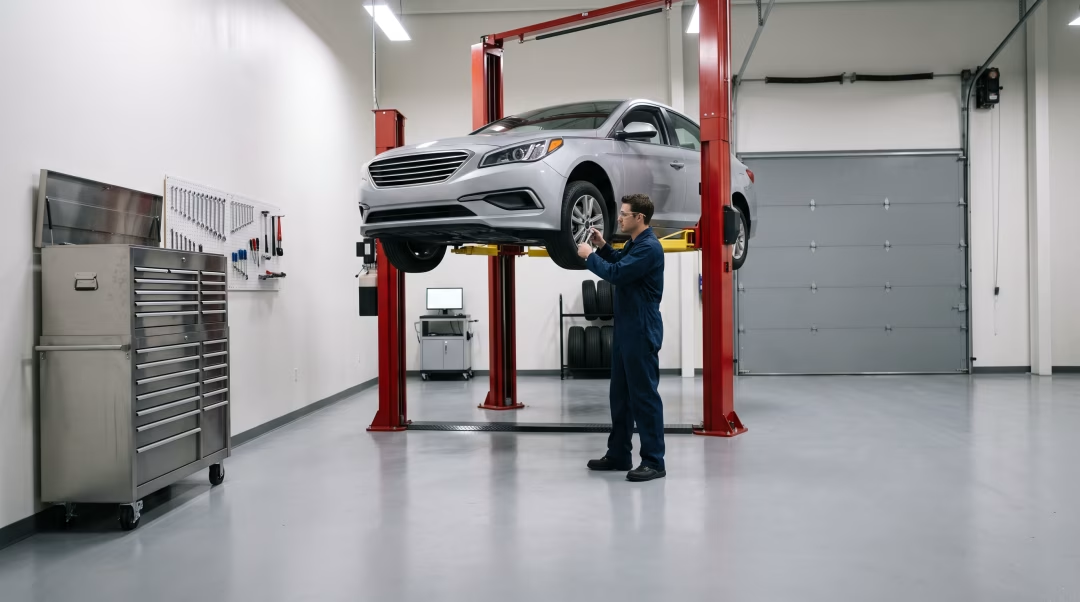
- Vehicle Lift: A two-post asymmetric or symmetric lift is the most versatile and space-efficient option for a small bay. It is the single most important investment for safety and efficiency.
- Diagnostic Scanner: A professional-grade OBD-II scanner is non-negotiable for modern vehicles. Choose a model with broad manufacturer coverage and data-streaming capabilities.
- Compressor and Air Tools: A reliable air compressor is the heart of the shop, powering impact wrenches and other essential air tools that save immense time and effort.
- Tire and Wheel Equipment: A basic tire mounting machine and wheel balancer allow you to control costs on one of the most common reconditioning items.
- Core Hand Tools and Shop Supplies: Invest in a quality set of wrenches, sockets, screwdrivers, and pliers. Also budget for jacks, stands, an oil drain, and a fluid evacuator.
Phase 3: Staffing, Workflow, and Operations
Your first technician is the most critical hire you will make for the service department. Look for a versatile, experienced individual, preferably with ASE certifications, who is comfortable working independently. They should have a strong diagnostic mindset and experience across a wide range of domestic and import models commonly found in your inventory. This is not the place for an entry-level trainee; you need a problem-solver who can handle a variety of tasks efficiently. Check references thoroughly and consider a hands-on skills assessment as part of the interview process. As your business grows, you can explore hiring additional staff, which our guide to hiring and retaining great staff can help with.
Initially, your service offerings should be tightly focused. The primary mission is reconditioning your sales inventory. Beyond that, offer a limited menu of high-demand, high-turnover services to your existing customer base: oil changes, brake service, tire rotations, and battery replacement. Avoid complex, time-consuming jobs like engine or transmission rebuilds. The goal is to build a reputation for fast, reliable, and affordable basic maintenance. This strategy perfectly complements the BHPH model, where a strong service department builds repeat business and keeps customers' vehicles running, ensuring they can continue making their loan payments.
For parts management, establish relationships with two to three local auto parts suppliers. This creates competition and provides backup options. Due to limited space, keep on-hand inventory to an absolute minimum—stock only the most common filters, bulbs, and fluids. Most parts should be ordered as needed. A simple repair order system is crucial for tracking work, parts, and labor hours for each vehicle. This can be a paper-based system to start, but integrating it with your Dealer Management System (DMS) should be an early goal to streamline accounting and vehicle history tracking.
What is the absolute minimum space required for a single service bay?
For a single bay with a standard two-post lift, you should plan for a footprint of at least 12 feet wide by 24 feet deep, with a ceiling height of at least 12 feet to allow the lift to operate fully. You will also need additional adjacent space for a workbench, toolbox, and some parts storage, so a total area of around 400-500 square feet is a realistic minimum.
Should I hire a full-time or part-time technician to start?
This depends on your initial vehicle volume. If you are reconditioning more than 10-15 cars per month, a full-time technician is likely justified. For smaller volumes, you might start with a highly-skilled part-time technician. The key is to hire someone with the experience to work efficiently and independently from day one.
What are the three most critical pieces of equipment to buy first?
The three non-negotiable pieces of equipment are a quality vehicle lift for safety and access, a professional OBD-II diagnostic scanner to accurately diagnose modern cars, and a good air compressor with a set of basic air tools. These three items form the backbone of any functional repair shop and provide the biggest immediate return on investment in terms of efficiency.
How can I manage parts inventory without a dedicated parts room?
In a small space, the best strategy is a "just-in-time" inventory model. Keep only essential, high-turnover items like oil filters and bulk fluids on hand. For everything else, establish strong relationships with local parts suppliers who offer multiple daily deliveries. Use durable, labeled mobile carts to stage parts for jobs in progress, which can be stored out of the way when not in use.
What are the biggest legal and compliance hurdles to be aware of?
The two biggest hurdles are typically local zoning ordinances and environmental regulations. You must ensure your property is zoned for automotive repair. Secondly, you need compliant systems for storing and disposing of hazardous waste like used oil, coolant, and solvents. Failing to comply with EPA and local rules can result in significant fines and legal issues.
