

and Effective Dealership Landing Page
In the competitive digital marketplace, a strong dealership landing page is your most powerful tool for converting online traffic into qualified leads. It serves as the digital front door for specific promotions, inventory segments, or marketing campaigns, distinct from your main homepage. A successful landing page does more than just display vehicles; it guides the visitor on a clear, focused journey towards a single, specific action. Whether that goal is filling out a credit application, scheduling a test drive, or valuing a trade-in, every element must work in harmony. From a compelling headline that grabs attention instantly to high-quality vehicle images and a simple, user-friendly form, the anatomy of an effective page is a science. It is about creating a seamless user experience that builds trust, communicates value, and makes it incredibly easy for a potential customer to take the next step with your dealership.
Understanding these core principles is the first step toward transforming your website traffic into measurable results. A well-designed landing page is not a static brochure but a dynamic lead-generation engine. By focusing on a clean layout, mobile-first design, and persuasive, straightforward messaging, you eliminate distractions and reduce friction for the user. This strategic approach ensures that your marketing dollars are working as efficiently as possible, capturing the interest of serious buyers and moving them further down the sales funnel from their very first click.
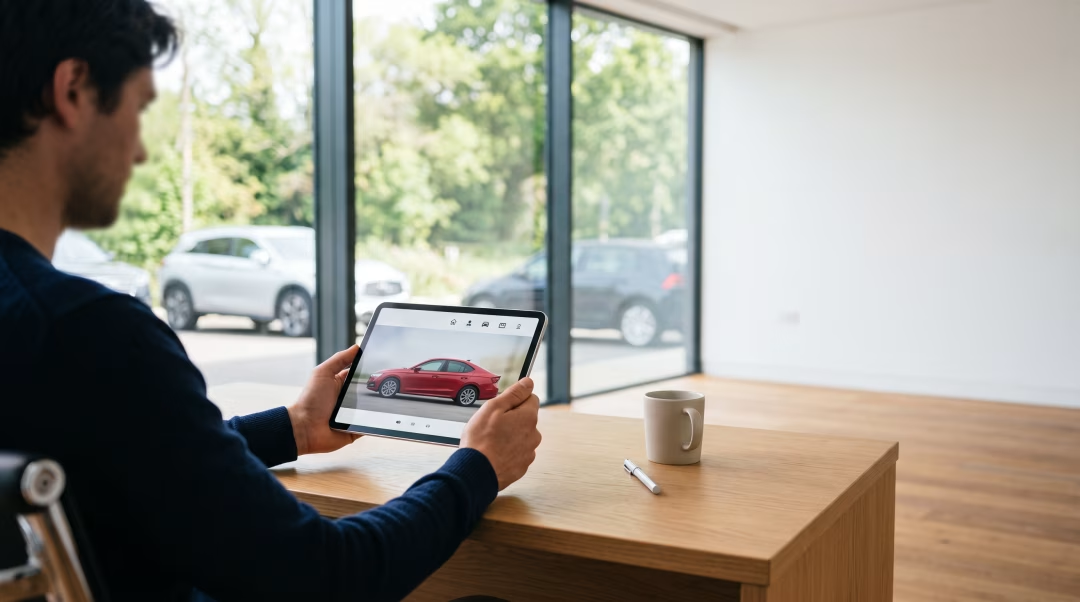
The Anatomy of a High-Converting Automotive Landing Page
A dealership landing page is a specialized, standalone web page created for a specific marketing or advertising campaign. Unlike a homepage, which offers broad navigation to various parts of your site, a landing page is designed with a single objective in mind. This focused approach is what makes it so effective. When a potential car buyer clicks on one of your ads, whether on social media or a search engine, they have a specific intent. A strong landing page meets that intent head-on, providing a direct path to the information or action they seek without the distractions of a full website. Mastering the key components of these pages is essential for maximizing your return on investment and growing your customer base. For more insights on digital strategy, explore our blog.
Core Component 1: The Compelling Headline and Subheading
The very first thing a visitor sees is your headline. It must be powerful, clear, and directly related to the ad they just clicked. If your ad promises "Low-Mileage SUVs Under $20,000," your landing page headline should echo that message precisely. This instantly reassures the visitor they are in the right place. A strong headline grabs attention, while a supporting subheading provides a brief, compelling reason to stay and learn more. For example, a subheading could be, "Explore Our Hand-Picked Selection of Certified Pre-Owned SUVs with Flexible Financing Options." This combination sets the stage for the entire user experience and is critical for reducing bounce rates.
Core Component 2: High-Quality Visuals and Media
Car buying is a highly visual process. Your landing page must feature professional, high-resolution images or even a short video of the vehicle or vehicle category in question. Blurry, poorly lit, or generic stock photos can instantly erode trust and devalue the perceived quality of your inventory. Use a gallery of clean images showing the vehicle from all angles, inside and out. A 360-degree interior and exterior view can significantly boost engagement. Video walkarounds are even more powerful, as they offer a dynamic and transparent look at the vehicle's condition and features. Remember to optimize all media for fast loading times, as slow pages are a primary cause of visitor abandonment. Ensure your site is showcasing your entire used inventory with the best possible photography.
Core Component 3: The Unmistakable Value Proposition
What makes your dealership or this specific offer the best choice? This is your Unique Value Proposition (UVP), and it needs to be communicated clearly and concisely. It is not just about the car; it is about the experience and benefits of buying from you. Your UVP should be woven throughout the page content. Key elements of a strong UVP include:
- Transparent, no-haggle pricing.
- A complimentary limited warranty or vehicle history report.
- Guaranteed credit approval or a simple online financing process.
- Home delivery or a seamless at-home test drive option.
Highlighting these benefits helps differentiate you from competitors and justifies the visitor's decision to engage with your dealership. The goal is to answer the customer's unspoken question: "Why should I choose you?"
Core Component 4: The Frictionless Lead Capture Form
The lead form is where the conversion happens. Its design and implementation are critical. The golden rule is to only ask for the information you absolutely need. For an initial inquiry or test drive request, a name, email, and phone number are often sufficient. A long form with too many required fields creates friction and will deter many potential leads. Place the form prominently "above the fold" so users do not have to scroll to find it. The form's call-to-action (CTA) button should be visually distinct and use action-oriented text like "Get My ePrice" or "Schedule My Test Drive" instead of a generic "Submit." If the goal is a full credit application, linking directly to your secure applications page is the best approach.
Core Component 5: Building Trust and Credibility
Online car shoppers are inherently skeptical. Your landing page must work to overcome this by building trust from the moment they arrive. Incorporate social proof and trust signals to reassure them that your dealership is reputable and customer-focused. Here are some of the most effective trust-building elements:
- Customer Testimonials: Short, authentic quotes from happy customers, ideally with a name and photo.
- Review Ratings: Displaying your average star rating from Google, DealerRater, or other review platforms.
- Trust Badges: Logos from the Better Business Bureau (BBB), industry associations, or security seals like SSL certificates.
- Clear Contact Information: An easily accessible phone number and physical address show that you are a legitimate, established business. Learn more about us and our commitment to transparency.
These elements provide third-party validation and make visitors feel more comfortable sharing their personal information and doing business with you. Having a dedicated page to meet our staff can also add a personal touch that builds significant trust.
Technical Excellence: Mobile-First Design and Page Speed
Today, the majority of online car shopping happens on a mobile device. A landing page that is not designed with a mobile-first approach is destined to fail. This means the page should look and function flawlessly on a smartphone screen, with large, tappable buttons, easily readable text, and forms that are simple to complete on a small keyboard. Beyond responsiveness, page speed is paramount. A page that takes more than a few seconds to load will see a massive drop-off in visitors. Use optimized images, streamlined code, and quality web hosting to ensure your landing pages load almost instantly. A fast, smooth mobile experience is no longer a feature—it is a fundamental requirement for success.
Frequently Asked Questions About Dealership Landing Pages
What is the main purpose of a dealership landing page?
The primary purpose of a dealership landing page is to convert a visitor from a specific marketing campaign into a qualified lead. Unlike a homepage that encourages exploration, a landing page is highly focused on a single call-to-action, such as submitting a lead form, scheduling a test drive, or filling out a credit application. This singular focus eliminates distractions and guides the user directly toward the desired conversion goal, making marketing efforts more effective.
How important is mobile-friendliness for a car dealership landing page?
Mobile-friendliness is absolutely critical. The vast majority of initial car research and shopping now happens on smartphones. If your landing page is difficult to view, navigate, or use on a mobile device, you will lose a significant portion of your potential leads. A responsive, mobile-first design ensures a seamless experience for all users, which improves engagement, builds trust, and ultimately drives more conversions.
Should I use video on my automotive landing pages?
Yes, video can be extremely effective. A short vehicle walkaround video can significantly increase engagement and build trust by providing a transparent and detailed view of the car's condition. It helps customers feel more confident in the vehicle before they even visit the lot. However, it is crucial to ensure the video is high-quality, professionally produced, and optimized to not slow down the page's loading time.
What is the difference between a homepage and a landing page?
A homepage is the main entry point of your website and is designed for a broad audience. It has multiple links and navigation options, encouraging users to explore different areas like your full inventory, service department, or about us page. A landing page is a standalone page created for a specific campaign with a single goal. It typically has minimal navigation to keep the visitor focused on the call-to-action, thereby increasing the conversion rate for that specific campaign.
How can I build trust on my landing page to get more leads?
Building trust is essential for convincing visitors to provide their contact information. You can build trust by including social proof like real customer testimonials and reviews, displaying ratings from reputable sites like Google, and featuring trust badges from organizations like the BBB. Additionally, providing clear contact information, a professional design, and being transparent about your offers all contribute to making a potential customer feel secure and confident in your dealership.
