

are Crucial for Dealership SEO
In the competitive world of automotive digital marketing, your Vehicle Detail Pages (VDPs) are the most valuable assets you have. These are not just online listings; they are your digital showroom, where potential buyers make critical decisions. When a customer lands on a VDP, they are no longer casually browsing—they are seriously considering a specific vehicle. This is why optimizing these pages is fundamental to a successful dealership SEO strategy. A well-crafted VDP does more than just display a car; it answers questions, builds trust, and guides the user toward taking the next step. It directly impacts your visibility in search engine results for highly specific, purchase-intent queries, connecting you with customers at the exact moment they are ready to engage. Strong VDPs translate into more qualified leads, increased website traffic, and ultimately, more vehicles sold. It is the cornerstone of converting online interest into on-the-lot appointments.
Ultimately, every element of your VDP contributes to its SEO performance and its ability to convert a visitor into a lead. From the words you choose to the speed at which the page loads, Google and your customers are paying attention. Investing time and resources into creating detailed, unique, and user-friendly vehicle pages is a direct investment in your dealership’s growth. It transforms your online inventory from a simple catalog into a powerful lead generation engine that works for you around the clock.
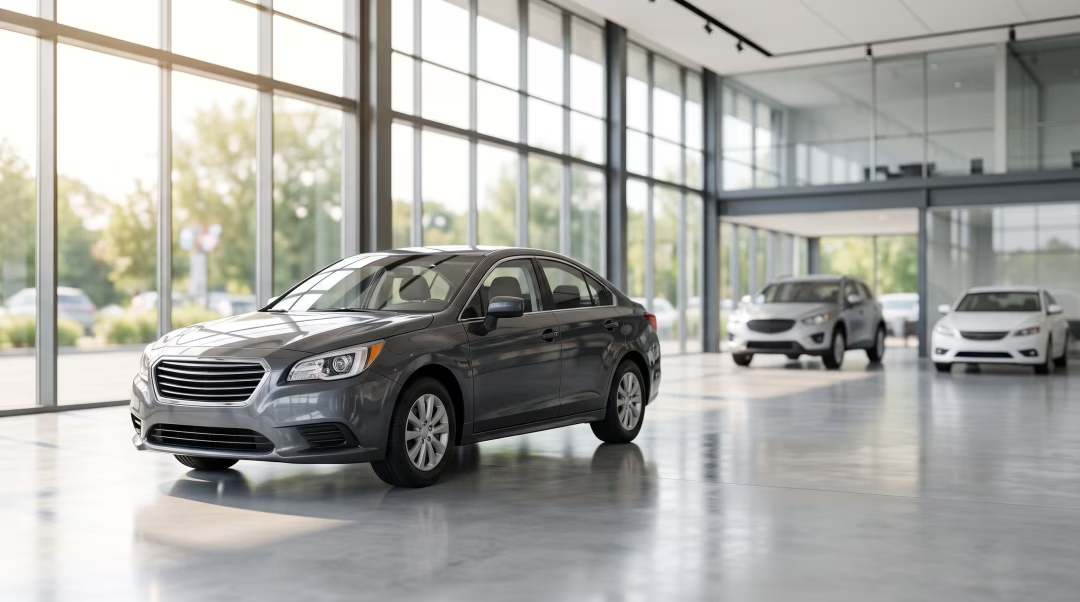
The Anatomy of a High-Performing Vehicle Detail Page
A Vehicle Detail Page, or VDP, is a dedicated page on your dealership website for a single vehicle in your inventory. Think of it as the online equivalent of a window sticker, but with far more depth and interactive potential. While your homepage attracts general interest and your inventory search pages (also known as Vehicle Listing Pages or VLP) allow users to filter options, the VDP is where the final consideration happens. It is the most granular level of your site, and for search engines like Google, this granularity is a treasure trove of ranking opportunities. An effective SEO strategy recognizes that most motivated buyers are not searching for "used cars near me." Instead, they are searching for a "used 2020 Toyota RAV4 XLE with low miles," and a properly optimized VDP is what allows your dealership to appear for that highly specific, valuable search.
Why Unique Content is Non-Negotiable for VDP SEO
One of the most common pitfalls in dealership web marketing is the use of generic, manufacturer-provided descriptions for vehicles. While convenient, this practice creates a massive duplicate content problem. When dozens or hundreds of other dealers are using the exact same text, it becomes impossible for your page to stand out to search engines. To truly excel, every VDP must have a unique, handcrafted description.
This is your chance to tell the vehicle’s story. Was it a one-owner trade-in with meticulous service records? Does it have a rare package or color combination? Mention the results of your reconditioning process. A compelling narrative not only provides unique text for SEO but also builds an emotional connection with the buyer and justifies your pricing. This simple step can dramatically improve your page's ability to rank for long-tail keywords—the specific, multi-word phrases that indicate high purchase intent. For more insights on how this fits into a larger strategy, you can read about how SEO helps used car dealers get discovered.
The Power of High-Quality Visuals
Today's car buyers expect a comprehensive visual experience. A few blurry photos taken on a cloudy day will not suffice. Your VDPs need a full suite of high-resolution images that showcase the vehicle from every conceivable angle, inside and out. But do not stop there. The most successful VDPs incorporate multimedia elements to engage users and increase time on page, a key ranking signal.
- Walk-Around Videos: A short, 60-90 second video tour of the vehicle builds immense trust and transparency. It allows you to point out key features and highlight the vehicle's excellent condition.
- 360-Degree Interior and Exterior Views: Interactive viewers give customers control, letting them explore the cabin and exterior at their own pace, mimicking the experience of being on the lot.
- Detailed Photos: Include close-ups of the tires, instrument cluster with mileage, infotainment screen, and any unique features or accessories.
High-quality visuals not only satisfy customer curiosity but also signal to search engines that your page provides rich, valuable content that deserves a higher ranking.
Technical SEO: The Foundation of VDP Success
Beyond content and visuals, several technical factors are crucial for VDP performance. These elements help search engines understand and index your pages correctly.
Title Tags and Meta Descriptions: Each VDP should have a unique, dynamically generated title tag and meta description. The title tag is one of the most important on-page SEO factors. A strong formula is: Year Make Model Trim | Dealership Name | City, State. For example: "Used 2021 Ford Explorer Platinum | Your Auto Group | Anytown, USA".
Clean URL Structure: The URL of the VDP should be simple, readable, and include key information. A good URL looks like `yourdealership.com/used/2021-ford-explorer-platinum-vin12345/` rather than `yourdealership.com/inventory/details.aspx?id=9876`. This helps both users and search engines understand the page's content at a glance.
Structured Data (Schema Markup): This is a form of code that you add to your website to help search engines understand your content more effectively. Using "Vehicle" schema, you can explicitly tell Google the car's VIN, make, model, mileage, color, and price. This information can then be used to create rich results in search, making your listing more prominent and clickable.
Mobile-Friendliness and Page Speed: The majority of car shoppers browse on their mobile devices. Your VDPs must be fully responsive, easy to navigate, and load quickly on a smartphone. Slow-loading pages lead to high bounce rates, which negatively impacts your SEO rankings.
Building Trust and Encouraging Action
A great VDP does more than just present information; it builds the confidence a customer needs to move forward. Integrating trust signals is essential. This includes providing easy access to vehicle history reports from providers like CARFAX or AutoCheck. Displaying customer reviews or dealership awards can also reinforce credibility. Finally, the page must have clear and compelling calls-to-action (CTAs). These go beyond a simple "Contact Us." Offer multiple conversion points, such as "Check Availability," "Schedule Test Drive," or even a tool to value my trade. Making it easy for a customer to take the next step is how you turn a visitor into a high-quality lead for your sales team. If you have any questions about our process, please do not hesitate to contact us.
Helpful Links
- Explore our full used inventory to see our VDPs in action.
- Learn more about us and our commitment to quality.
- Review our privacy policy to understand how we protect your information.
What is a Vehicle Detail Page (VDP)?
A Vehicle Detail Page, or VDP, is a specific web page on a dealership's website that is dedicated to a single car, truck, or SUV in its inventory. It contains all the essential information about that vehicle, including photos, videos, specifications, pricing, a unique description, and contact options. It is the digital equivalent of looking at a specific car on the sales lot.
Why is unique content on each VDP important for SEO?
Unique content is critical because it helps you avoid duplicate content penalties from search engines like Google. When many dealerships use the same generic text from the manufacturer, it is hard for search engines to determine which page is the most relevant to show. Writing a unique, descriptive paragraph for each vehicle helps your page stand out and rank for specific, long-tail keyword searches.
How many photos should a vehicle detail page have?
There is no magic number, but more is almost always better. A good rule of thumb is to have at least 20-30 high-quality images covering every angle of the exterior, a comprehensive tour of the interior (including the dashboard, seats, and cargo area), and close-ups of the wheels and any notable features. The goal is to leave no question unanswered for a potential buyer.
Does video content help improve VDP SEO?
Absolutely. Video significantly increases the time a visitor spends on your page, which is a positive ranking signal to search engines. A walk-around video provides a transparent and engaging look at the vehicle that photos alone cannot capture. This builds trust with the consumer and signals to Google that your page offers rich, valuable content, which can boost its ranking in search results.
What is the biggest VDP mistake dealerships make?
The single biggest mistake is relying on default, generic, or insufficient information. This includes using stock photos instead of actual vehicle pictures, copying and pasting manufacturer descriptions, and having slow page load times, especially on mobile devices. An effective VDP must be unique, comprehensive, fast, and visually appealing to both customers and search engines.
