
Vendors for Detailing and Reconditioning Work
The speed and quality of your vehicle reconditioning process directly impact your dealership's bottom line. Every day a car sits waiting for detailing or repairs is a day it cannot be sold, tying up capital and aging your inventory. Choosing the right external vendors for this critical work is not just an operational decision; it is a financial one. A reliable partner ensures your vehicles reach the frontline faster, looking their absolute best to command top dollar and attract discerning buyers. This guide is designed to provide a comprehensive framework for evaluating and selecting detailing and reconditioning vendors who will act as a true extension of your team. By establishing clear criteria and a thorough vetting process, you can build partnerships that enhance efficiency, improve vehicle presentation, and ultimately drive profitability for your entire operation. A great partner helps you turn inventory quicker and maximize gross profit on every sale.
Finding a vendor is easy, but finding a strategic partner requires diligence. The wrong choice can lead to inconsistent quality, missed deadlines, and hidden costs that erode your profit margins. A superior reconditioning partner, however, becomes a competitive advantage. They understand the urgency of the used car business and deliver consistent, high-quality results that instill buyer confidence. As you explore your options, remember that the goal is to secure a seamless workflow that transforms fresh trade-ins into pristine, frontline-ready vehicles with minimal friction and maximum value.
The Core Pillars of Vendor Evaluation
Selecting a vendor for your dealership’s reconditioning and detailing needs is a decision that ripples through your entire sales process. From inventory turn to customer satisfaction, the quality of your recon work sets the stage for success. A haphazard approach based on price alone often leads to disappointing results and operational headaches. Instead, a structured evaluation process focused on key performance indicators will help you forge a lasting, profitable partnership. The key is to look beyond the cost per car and analyze the total value a vendor brings to your business. This involves a deep dive into their processes, quality control, reliability, and ability to scale with your needs. Consider this your roadmap to identifying a partner who will not just clean cars, but actively contribute to your dealership's growth and reputation. For a deeper dive into negotiating favorable terms, review our guide on how to negotiate better terms with dealership vendors.
Assessing Quality and Consistency
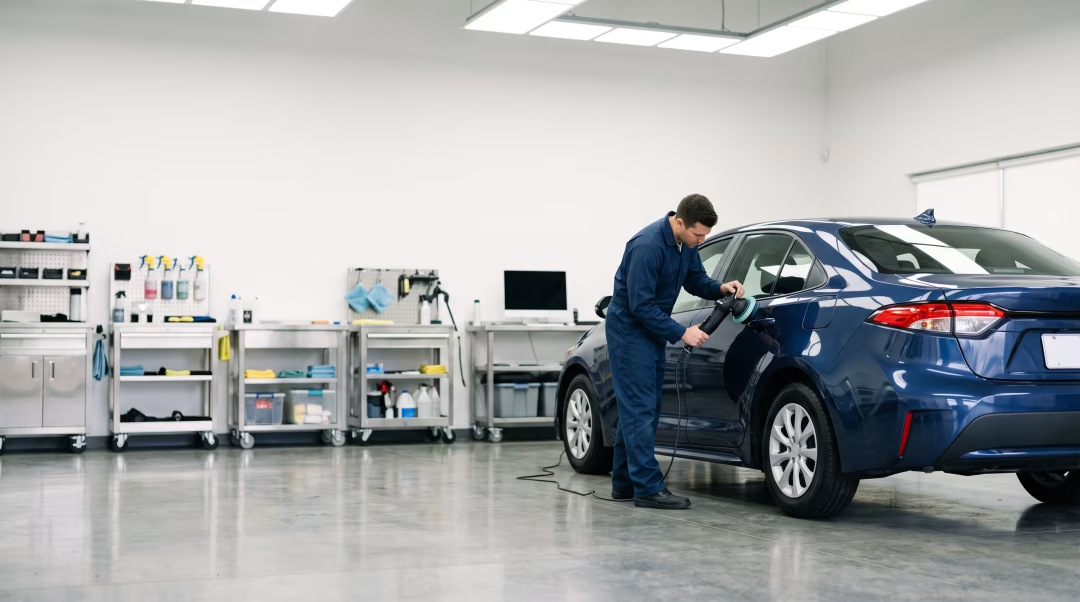
The most crucial factor in evaluating any detailing or reconditioning vendor is the quality of their work. A vehicle that looks immaculate under showroom lights builds immediate trust with a potential buyer. Inconsistency, on the other hand, can lead to customer complaints or force your team to spend valuable time re-doing subpar work. When vetting a potential partner, insist on seeing their work firsthand. Ask for a tour of their facility to observe their processes, the products they use, and their quality control checkpoints. A professional operation will have a standardized procedure for every vehicle. Request to see before-and-after examples from their portfolio, and more importantly, ask for references from other dealerships they service. A trial run with a few of your own vehicles is an excellent way to gauge their real-world performance against your specific standards, which you can outline using a reconditioning checklist for clear expectations.
Turnaround Time and Operational Efficiency
In the used car business, time is money. The metric of "days to frontline" is a critical indicator of your operational efficiency. A vendor that takes too long to turn a vehicle around directly impacts your holding costs and slows your inventory turn. A top-tier partner understands this urgency. During your evaluation, ask pointed questions about their average turnaround time for different levels of reconditioning. How do they handle unexpected volume increases? What is their communication process for delays or unforeseen issues, such as discovering hidden damage? Their answers will reveal their commitment to speed and partnership. An efficient vendor helps you master the art of balancing reconditioning costs against resale value by getting cars ready for sale quickly, maximizing their market appeal before they depreciate on the back lot.
Creating Your Vendor Evaluation Scorecard
To make your decision-making process objective and data-driven, create a vendor scorecard. This tool allows you to compare multiple candidates across the same set of critical criteria. By assigning a weight to each category based on its importance to your dealership, you can calculate a score for each potential partner, removing emotion and bias from the equation. This methodical approach ensures you select the vendor that truly aligns with your operational goals and quality standards. Here are the essential categories to include:
- Quality of Work (Based on a trial or portfolio review)
- Average Turnaround Time (Speed and reliability)
- Pricing and Value (Clarity, fairness, and overall value)
- Scope of Services (Range of offerings like PDR, wheel repair, etc.)
- Communication and Professionalism (Responsiveness and ease of doing business)
- Insurance and Compliance (Proof of adequate liability coverage)
- References and Reputation (Feedback from other dealers)
Insurance, Liability, and Risk Management
Never overlook the importance of proper insurance and liability coverage. When a vendor is working on your property or has your valuable inventory in their possession, you must be protected. Before signing any contract, require proof of their insurance, including garage liability, workers' compensation, and a garagekeepers policy. Verify that the coverage limits are sufficient for the value of the vehicles they will be handling. Ask to be added as an additional insured on their policy. A professional and legitimate vendor will have no issue providing this documentation. A refusal or hesitation to do so is a major red flag that should prompt you to walk away immediately. Protecting your assets is paramount, and a vendor's insurance is a non-negotiable part of that protection. For more information on your own coverage needs, you can explore our resources on garage liability insurance for used car dealers.
What is a reasonable turnaround time for a standard vehicle detail?
For a standard interior and exterior detail on a vehicle in average condition, a reasonable expectation from an efficient vendor is 24 to 48 hours. However, this can vary based on the vehicle's initial condition and any additional services required, such as paint correction or odor removal. The key is to establish a clear Service Level Agreement (SLA) with your vendor upfront.
Should I use one vendor for all reconditioning or multiple specialized vendors?
This depends on your volume and the quality of available vendors. A single, full-service vendor can simplify logistics and invoicing. However, using specialized vendors for services like paintless dent repair (PDR), wheel refinishing, or glass replacement may result in higher quality work for those specific tasks. Many dealers find a hybrid approach works best: one primary detailing partner and a shortlist of trusted specialists for other needs.
How can I ensure consistent quality from my vendor over time?
Consistency is maintained through clear communication and regular feedback. Establish a checklist of your expectations for every vehicle and perform spot checks on completed work. Schedule regular meetings with your vendor representative to review performance, address any issues promptly, and discuss upcoming needs. A true partner will appreciate this collaborative approach to quality control.
What are some red flags to watch for when vetting a new detailing vendor?
Red flags include an inability or unwillingness to provide proof of insurance, a lack of professional references from other dealerships, vague or confusing pricing structures, and a disorganized or unclean facility. Also, be wary of vendors who over-promise on turnaround times or offer prices that seem too good to be true, as quality may suffer as a result.
What pricing models are common for dealership reconditioning services?
The most common pricing models are a flat rate per vehicle (often tiered by vehicle size like car, SUV, truck), an hourly rate, or a customized package price based on your dealership's specific volume and needs. It is crucial to get a detailed list of what is included in any base price to avoid unexpected upcharges for services you assume are standard.
