

Explained for BHPH Dealers
In the world of Buy Here Pay Here (BHPH) financing, managing risk is essential to helping customers with unique credit situations secure reliable transportation. One of the key technologies used to achieve this balance is the starter interrupt device (SID). These small, professionally installed units serve as a powerful payment assurance tool. By providing a method to prevent a vehicle from starting if a loan becomes severely delinquent, they encourage communication between the customer and the dealership. This technology is not about punishment; it is about creating a framework that reduces the lender's risk. In turn, this allows BHPH dealers to extend financing opportunities to a broader range of buyers who might otherwise be turned away by traditional banks. Understanding how these devices work is the first step toward a transparent and successful financing experience for everyone involved.
Ultimately, a starter interrupt device is a tool that supports the unique relationship between a BHPH dealer and their customer. It helps keep communication lines open and ensures that payment arrangements are maintained, which is fundamental to the in-house financing model. This technology enables dealers to operate with greater confidence, maintain a healthy portfolio, and continue serving their community. For customers, it can be the key that unlocks the door to vehicle ownership when other options are not available.
A Comprehensive Guide to Starter Interrupt Technology in BHPH
For many consumers and even some industry professionals, the technology used in Buy Here Pay Here operations can seem complex. Starter interrupt devices, in particular, are often misunderstood. By breaking down what they are, why they are used, and how they function, we can demystify this important component of modern in-house auto financing. These devices are a direct response to the unique risks associated with lending to individuals with subprime credit, and they play a crucial role in making vehicle ownership possible for millions.
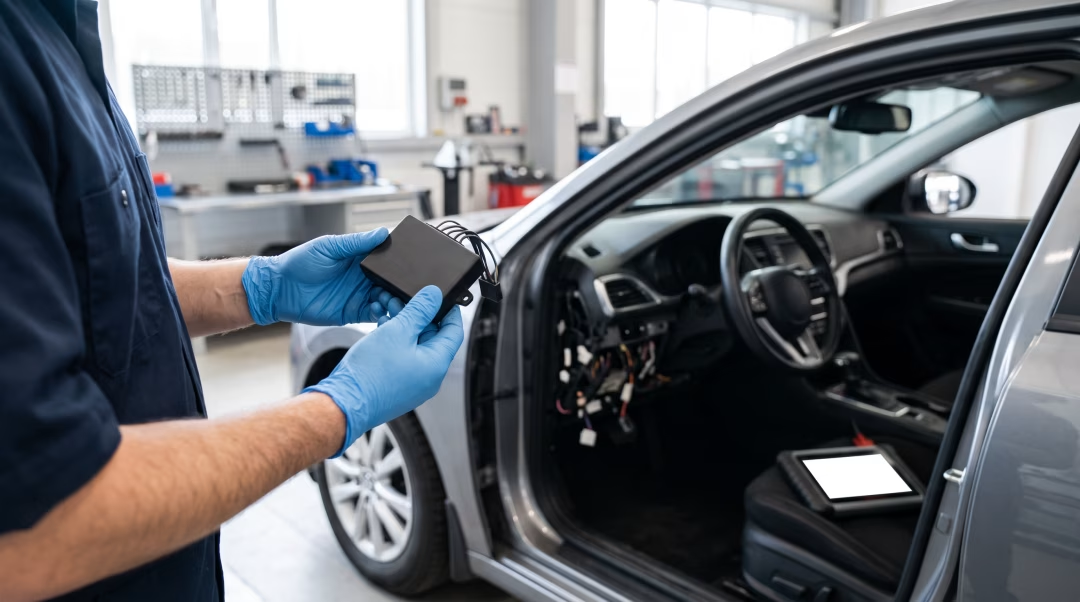
At its core, a starter interrupt device, sometimes called a payment assurance device, is a small electronic module connected to a vehicle's ignition system. Its function is straightforward: when activated remotely by the lender, it prevents the electrical circuit that engages the starter motor from completing. This means that while all other electronics in the car (lights, radio, power windows) will work perfectly, turning the key or pushing the start button will not result in the engine cranking. It is a common misconception that these devices can shut a car off while it is running; for critical safety reasons, they are designed only to prevent a vehicle from starting.
The Role of Starter Interrupt Devices in BHPH Operations
BHPH dealerships operate on a model of in-house financing, acting as both the car seller and the bank. This means they assume 100% of the risk if a borrower defaults on their loan. To manage this risk, dealers employ several strategies, from thorough underwriting to proactive collections. Starter interrupt devices are a key part of this risk mitigation strategy. Their presence helps ensure the dealership can protect its asset—the vehicle—in a worst-case scenario.
The primary purpose is not necessarily to disable vehicles but to prompt action from the customer. The process typically involves several stages of communication before a device is ever activated:
- Payment Reminders: Long before a payment is due, automated systems can send text or email reminders.
- Grace Period Communication: After a missed payment, collections staff will attempt to contact the customer to make arrangements.
- Device Warnings: If communication fails and the account becomes severely delinquent, many systems can emit a series of audible beeps from a speaker inside the car for a day or two before any action is taken. This serves as a final, urgent reminder to contact the dealership.
- Starter Disablement: Only after all other attempts to resolve the delinquency have failed is the starter interrupt feature activated. Once the customer makes a payment or gets in touch to arrange one, the device is remotely deactivated, and the vehicle can be started again.
Comparing Starter Interrupt Devices and GPS Tracking
It is important to distinguish between starter interrupt functionality and GPS tracking, though many modern devices combine both features into a single unit. The decision on which technology to use often comes down to a dealer's specific business model and state regulations.
As we've discussed, the starter interrupt function is purely for payment assurance. Its goal is to prevent the use of the vehicle to encourage payment. GPS tracking, on the other hand, is primarily a tool for asset recovery. If a loan defaults and the vehicle must be repossessed, the GPS functionality allows the dealer or recovery agent to locate the vehicle efficiently. This reduces repossession costs, minimizes potential confrontations, and increases the chances of a successful recovery.
Many BHPH dealers find that a combination of both technologies offers the most comprehensive protection for their portfolio. The starter interrupt helps reduce the number of accounts that reach the point of repossession, while the GPS provides a safety net for those that do. You can learn more by reading our guide on GPS vs. starter interrupt for BHPH dealers.
Legal Compliance and Customer Disclosure
The use of payment assurance technology is governed by state and federal laws. Transparency with the customer is not just good business practice; it is a legal requirement. Before a sale is finalized, the dealership must fully disclose the presence of the device and how it functions. This information must be clearly stated in the retail installment contract and other sales documents signed by the buyer.
Failing to provide proper disclosure can lead to significant legal trouble for a dealership. Customers must give their explicit consent to have the device installed and used as a condition of the loan. Adhering to these contract requirements protects both the dealer and the consumer by ensuring all parties understand their rights and obligations from the outset. This transparency builds trust and sets the foundation for a positive long-term relationship.
Helpful Links for BHPH Dealers and Customers
- Explore our approach to business on our about-us page.
- Learn more about what to know before installing a payment assurance device.
- Understand the collections process better by reading about building a collections process that keeps customers paying.
- Find out how these technologies integrate with a dealer management system.
Frequently Asked Questions About Starter Interrupt Devices
Will a starter interrupt device shut my car off while I am driving?
Absolutely not. For safety reasons, these devices are designed only to prevent a vehicle from starting. They cannot and will not disable a vehicle that is already in motion or has its engine running. The technology only interrupts the signal to the starter motor during the ignition sequence.
What should I do if I hear warning beeps coming from my car?
The warning beeps are a pre-disablement alert, indicating that your auto loan account is seriously past due. You should contact the dealership's collections department immediately. This is your final opportunity to make a payment or a payment arrangement before the starter is temporarily disabled.
Is it legal for a dealership to use a starter interrupt device?
Yes, it is legal in most states, provided that the dealership gives full and clear disclosure to the customer before the sale. The presence and function of the device must be detailed in the financing contract, and you must consent to its installation as a condition of receiving the in-house loan.
How quickly is the device deactivated after I make a payment?
In most cases, the device is deactivated remotely almost instantly after a payment is processed and clears. The dealership sends a command over a cellular network to the device, restoring the vehicle's starting capability within minutes so you can get back on the road.
Can I remove the starter interrupt device myself?
No, you should not attempt to remove or tamper with the device. It is the property of the finance company until the loan is paid in full. Tampering with the device is a violation of your financing agreement and can result in immediate repossession of the vehicle and potential legal action. The devices are also often equipped with tamper alerts that notify the dealer of any interference.
